

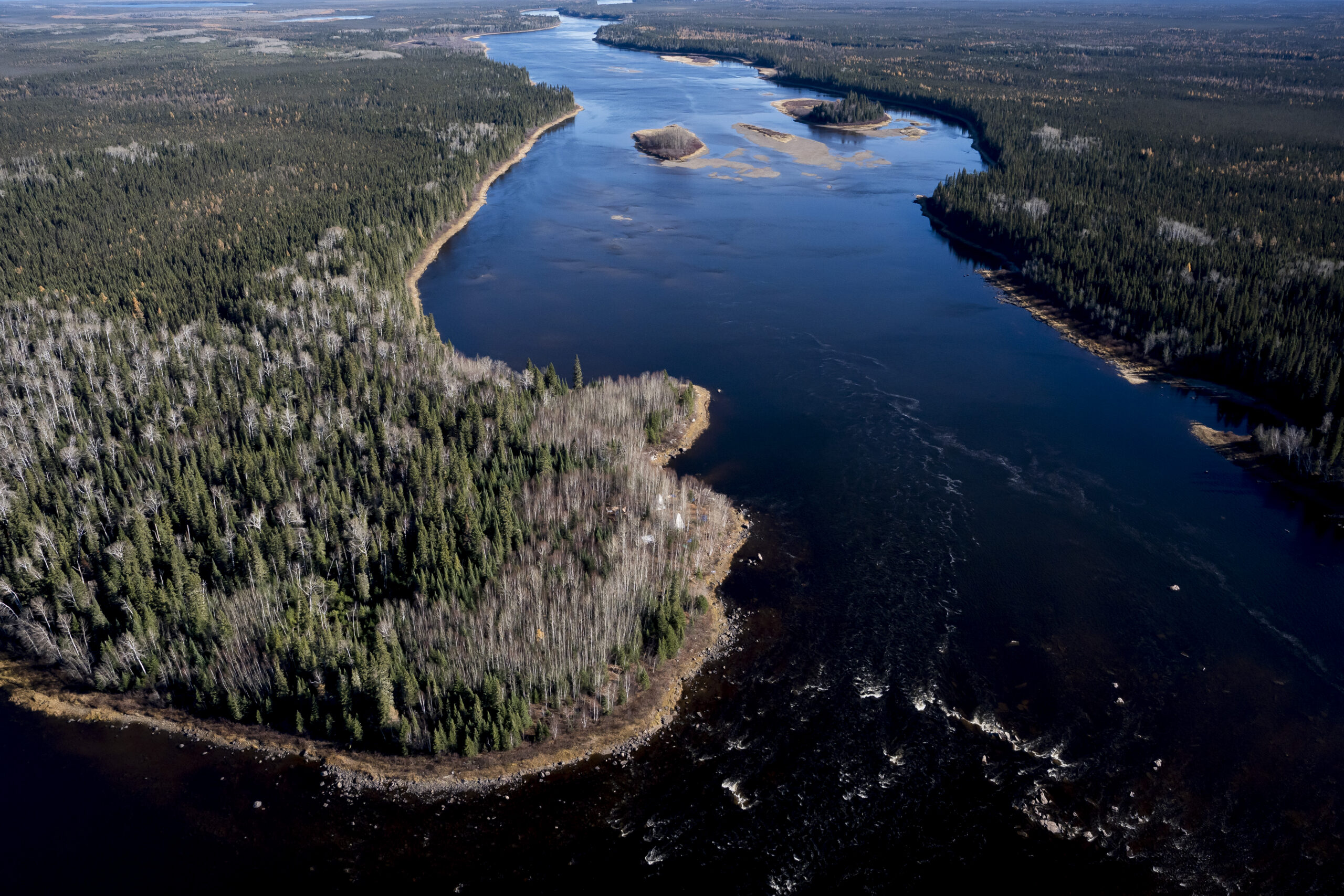
The strategic importance of the Ring of Fire is no longer in question. Today, with geopolitical tensions reshaping supply chains and intensifying the race for secure critical minerals, the region’s value has never been greater. The real question is how to move projects forward in a landscape defined by distance, complexity, and diverse perspectives.
I asked myself that very question in June 2018 — my second week at Queen’s Park, working for then-Minister of Energy, Northern Development and Mines Greg Rickford. My colleague and I were admiring the sheer scale of the province on a mining map when our eyes landed on a highlighted piece of the far north: the Ring of Fire. The government had campaigned on unlocking its potential, but as I stared at that map, I wondered how we would turn that promise into projects.
That question stayed with me as I continued working on this file. Years later in 2022, I visited Webequie First Nation. We arrived 1,100 kilometres north of Toronto in an eight-seater plane, blown around by high winds while the young pilot negotiated our landing on a narrow airstrip in a sea of evergreen forest. When we arrived at the Band Office, I had the privilege of joining a meeting with then-Minister of Mines George Pirie, then-Chief Cornelius Wabasse of Webequie First Nation and Chief Bruce Achneepineskum of Marten Falls First Nation – two essential partners for building the road network to the Ring of Fire.
We had a great meeting. These remarkable leaders outlined their visions for prosperity and how road access, done responsibly, was an essential part of the plan. In the north, many First Nations are only connected by ice roads during the winter months, and these are becoming less reliable every year. For the rest of the year, everything from groceries to medical supplies must be flown in at staggering cost. Permanent roads would change that reality by lowering costs and improving access to essential services. The roads would also unlock an estimated $22 billion in mining activity, unlocking incredible business and job opportunities in the far north.
This trip helped me understand that the Ring of Fire is about much more than critical minerals; it’s about more than roads. It’s a path forward toward economic reconciliation — one where First Nations are full partners leading environmental assessments for roads that will connect their communities to Ontario’s highway network and to the resources that can drive shared prosperity. Their leadership has been outstanding, delivering two of the most comprehensive consultation processes for environmental assessments in Ontario’s history. It is remarkable that I once stood at the point where the Webequie Supply Road will connect to their community, and now the environmental assessment for that project has been officially submitted to government.
And there’s more progress. Over the last few months, Ontario signed separate agreements with then-Chief Wabasse and Chief Achneepineskum, supporting economic development preparedness and establishing timelines for road construction. At the federal level, the government has signaled interest in a coordinated “One Project, One Process, One Decision” permitting model, though a firm capital commitment from the federal government is still required. The province also recently designated the Greenstone Transmission Line as a priority project, with Hydro One selected to build the 230 kilometre line connecting Nipigon Bay to the Ring of Fire corridor. Several First Nations will be equity partners in this project, which will enhance power reliability in the north and support future mining activity.
For businesses exploring opportunities in this region, these are encouraging developments — but the path ahead remains complex. Through my years working on the mining and northern development files, I learned three guiding principles that can lead to progress — and I saw how quickly projects stall without them.
First, full partnerships with First Nations are the foundation for success. Not limited transactional engagement, but enduring relationships built on mutual respect and trust well before construction. Across the country, partnership models have evolved significantly: impact benefit agreements are giving way to long-term partnerships grounded in equity and shared prosperity.
Second, permitting and approvals require a strategy that understands the region holistically. Narrow approaches or addressing issues only when they arise simply does not work. The geography, environmental sensitivities, community priorities and multi-jurisdictional oversight require mapping the full regulatory landscape from the outset. Successful proponents understand that the permitting process is not a hurdle — it is the path to project viability.
Third, progress requires shaping infrastructure decisions, not reacting to them. Roads, transmission lines and permitting only come together when proponents proactively map their needs, explain the broader value and work with governments and First Nations to align timing and investment. When companies clearly articulate what they need, why it matters and how it aligns with community and government priorities, decisions move faster.
At Counsel Public Affairs, we help organizations do exactly that. Our team brings deep expertise in government relations, Indigenous engagement and strategic communications to navigate complex environments and position clients for long term success. In a region as transformative as the Ring of Fire, informed strategy isn’t a luxury — it’s the foundation for success.