

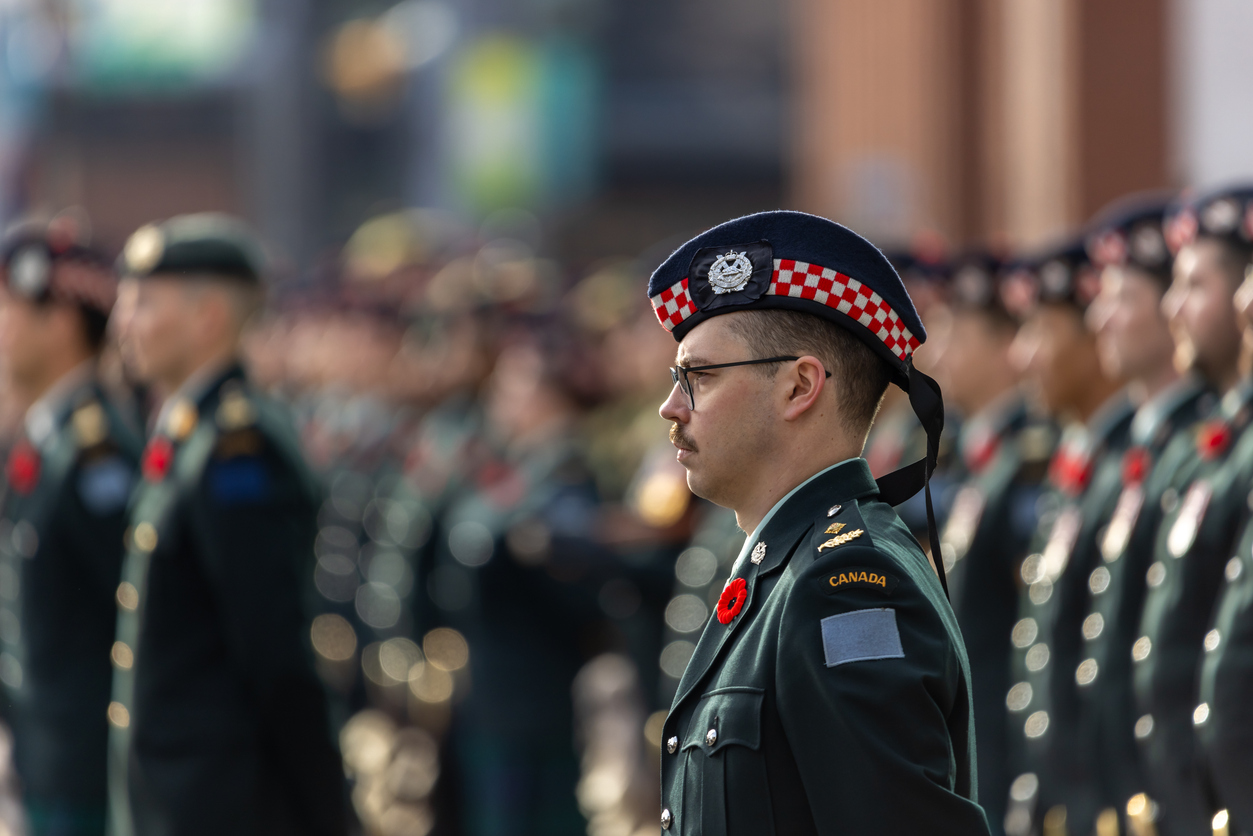
As Canadians don their poppies this November, as they have for generations, the realities of military service may resonate a little more deeply this year.
The world is increasingly unstable, yet for most Canadians, the dangers of that instability still feel distant. Memories of Afghanistan are fading, and the sacrifices demanded of those who serve in the Canadian Armed Forces can seem far removed from our daily lives.
The tragedy in Wainwright has brought those realities painfully close to home.
It has reminded Canadians that those who volunteer to defend our country, who stand ready to fight for their fellow citizens, face real dangers. Not just in war zones or on deployments overseas, but here at home, every day.
The excellence the Canadian Armed Forces demonstrate on operations around the world is forged through rigorous training and realistic exercises here in Canada. That training is essential to military readiness. And by its very nature, it carries risk.
The tragedy in Wainwright affected 43 military families directly. Four service members lost their lives and 39 were injured, many gravely. Countless others — colleagues, friends, commanders and loved ones — will carry the weight of that accident for years to come.
Military service is a dangerous profession in an increasingly dangerous world.
On November 11, we will remember those who did not return from the First and Second World Wars, Korea, Afghanistan and other conflicts. We will honour their courage, their service and their sacrifice.
But I ask Canadians to remember something else.
The risks of military service did not end with those wars. And sacrifice is not confined to the battlefield.
Canadian service members have lost their lives on peacekeeping missions, training exercises and deployments around the world. They have died preparing to defend us, just as others have died in combat.
In 1991, Sub-Lieutenant Cory Wells, the husband of a dear friend, was killed in a diving accident during the Gulf War. His death brought home to me, a person who had served in the CAF, and who came from a military family, the ever-present risks of military service.
During my tenure as Deputy Minister of National Defence, we lost seven Canadians in two separate aviation accidents — the crash of a helicopter deployed from HMCS Fredericton and the crash of a Snowbirds aircraft. Seven lives lost. Families, friends and colleagues changed forever.
These are not simply statistics or entries in the history of the Canadian Armed Forces. They are people who volunteered to serve their country, who accepted risks most Canadians will never face, and whose families have borne the consequences of that service.
There are no veterans of the First World War left among us, and the number of Second World War veterans continues to diminish. Time marches on, and with it, our living connection to those defining moments in our history.
But remembrance must not diminish with the passing of generations. Nor should it be confined to the wars of the past.
As we honour those who fought and died for Canada and for the freedoms we enjoy, we must also recognize the men and women serving today. Those who train, deploy, stand watch and prepare for dangers we hope they will never have to confront.
And we must remember those who have made the ultimate sacrifice in that service, whether in peacetime or in conflict.
Remembrance also carries an obligation.
If we ask Canadians to volunteer to defend this country, to accept the risks of military service and to go into an increasingly uncertain and dangerous world under the maple leaf, then we owe them more than gratitude.
We owe them the training, equipment, resources and support they need to do their jobs and, whenever possible, to come home safely.
Investing in Canada’s defence is not simply a question of budgets, procurement or military capability. It is a commitment to the people we ask to serve, to the families who support them and to the country they have sworn to defend.
So this November 11, wear your poppy. Remember those who came before us. Honour those who never came home.
But also take a moment to thank those who serve today, to remember those we have lost in service, and to recognize the responsibility we share for their safety and readiness.
Because remembrance is not only about the past. It is about the obligations we carry into the future.
It’s more than a memory.