
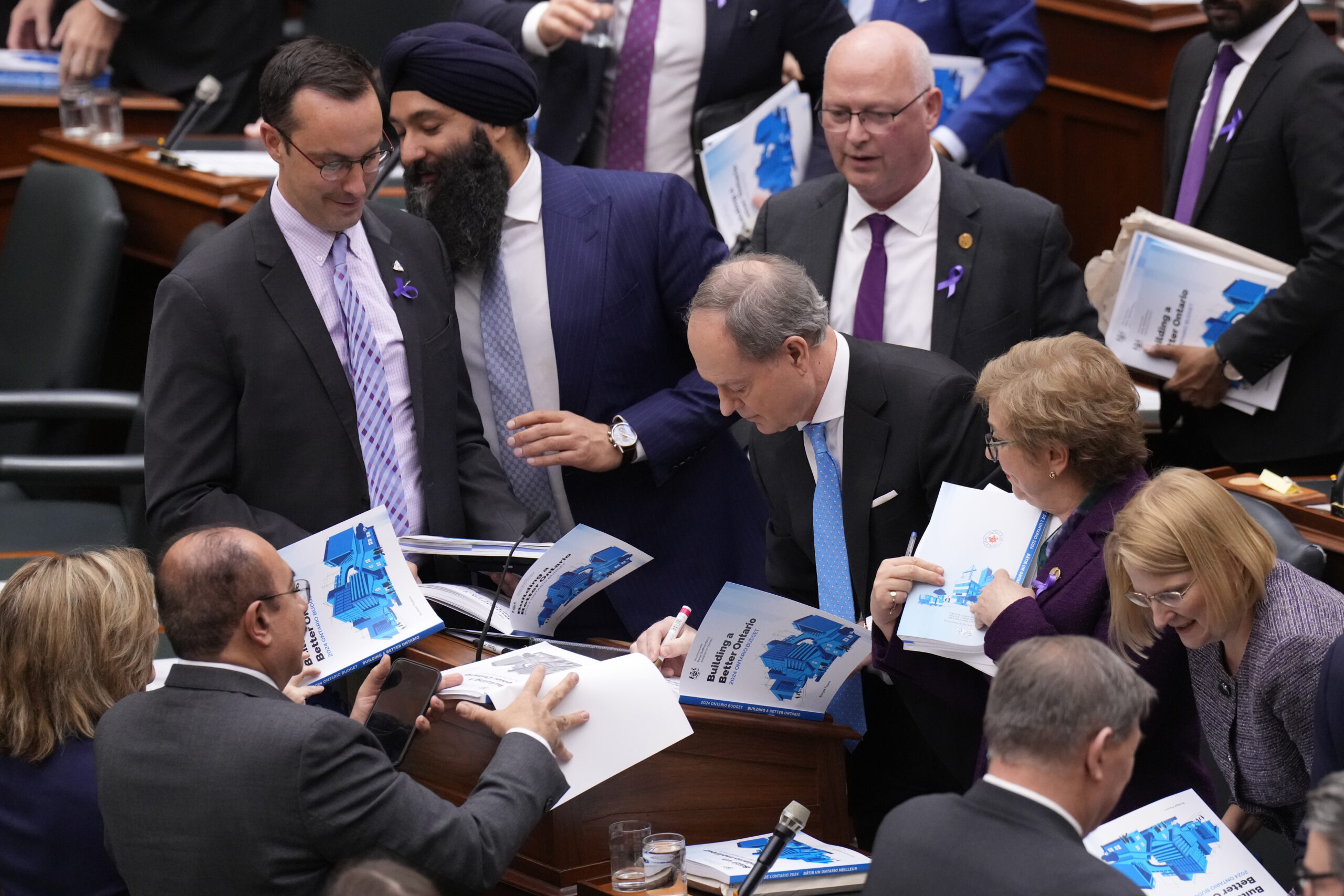
As Ontario prepares to release its 2026 Budget, it does so amid renewed trade tensions and persistent affordability pressures. These headwinds are tightening the province’s fiscal room and forcing difficult choices in Queen’s Park about where to spend and where to hold the line.
Having recently worked in the Office of the President of the Treasury Board, I participated in two budget cycles and saw firsthand how central agencies balance political priorities and fiscal discipline through the Strategic Planning Process (SPP) — the government’s multi-year expenditure planning procedure. Here is how that process unfolds behind the scenes.
SPP starts well before its official kickoff in November. By the summer, ministries are already socializing fiscal requests with the central agencies — Treasury Board, the Ministry of Finance, Cabinet Office, and the Premier’s Office — the small circle that ultimately steers the decisions.
As ministries present their proposals during SPP, central agencies also begin hearing from external organizations through pre-budget outreach. Many of these stakeholders advocate for the same initiatives they have submitted through their respective ministries. They bring an outside perspective that can shape how proposals are received.
Ministries face rigorous scrutiny throughout the process. Each ministry must justify the funding needed to maintain existing programs while making its case for new initiatives. Central agencies then work through those requests line by line. They determine which fiscal pressures are manageable, which service expansions are viable, and how far the province can stretch without compromising broader objectives. Proposals are then refined, scaled back, or deferred as ministries’ ambitions get tested against fiscal reality. No allocations appear in the budget until there is alignment at the center.
Consensus among central players, however, does not come easily. Natural tensions exist as the Premier’s Office pushes to advance political priorities, the Ministry of Finance keeps a tight grip on the province’s fiscal position, and Treasury Board plays the balancing role between the two. The Secretary of the Cabinet also weighs in when major decisions are at stake.
Given these dynamics, internal push and pull is inevitable. No single office walks into the room with complete control because there is rarely a fixed hierarchy in these discussions. Influence shifts from file to file, depending on the dollars at stake, the politics, and the projected consequences of the decision. The final outcome reflects a series of trade-offs, where each office secures some priorities while making concessions on others.
With the 2026 Budget approaching its finish line, the combination of external pressures and internal mechanics is beginning to reveal where the government’s priorities are likely to land. Many of those choices point in the same direction: strengthening Ontario’s domestic capacity across sectors. Four areas are worth watching as those dynamics translate into concrete policy choices.
- Transportation and Infrastructure
Transportation and infrastructure spending have been core to the Ford government’s economic competitiveness strategy. As population growth and service demand continue to increase, expect the 2026 Budget to keep prioritizing capital investment in highway corridors and major transit projects. One of the challenges will be balancing new builds with the rising cost of maintaining existing infrastructure.
- Health
On health care, the government has leaned heavily into hospital infrastructure, with dozens of major builds and expansions underway. At the same time, improving access to primary care has become a parallel priority, particularly through workforce expansion and community surgical centers. The coming budget is poised to continue funding both priorities. Medical education, including support for medical schools, is another area worth watching.
- Education
Education will be under pressure this year as province-wide school board bargaining resumes. Compensation represents a large share of education spending, making this budget cycle especially consequential for the sector. Meanwhile, student achievement results and recent governance reforms have put the system under closer scrutiny. The level of core education funding will demonstrate how the government aims to strengthen system performance.
- Energy and Mines
Energy and mining are Ontario’s key levers for economic security. The government has moved quickly to accelerate mining development and expand nuclear generation, signalling a focus on strengthening domestic supply chains and reliable electricity. There should be no surprise to see continued investment in critical minerals and the development in the Ring of Fire, alongside further grid expansion in Northern and rural ridings.
Taken together, Budget 2026 is likely to emphasize internal capacity, supply chain resilience, and long-term economic competitiveness. In that sense, doubling down on domestic strength feels less rhetorical and more strategic.
In a budget process defined by trade-offs and competing pressures, success requires more than strong ideas — it requires alignment on timing and positioning. At Counsel Public Affairs, we help clients position priorities early. Our focus is on shaping proposals that are fiscally sound and politically resilient within the realities of decision-making at Queen’s Park.