

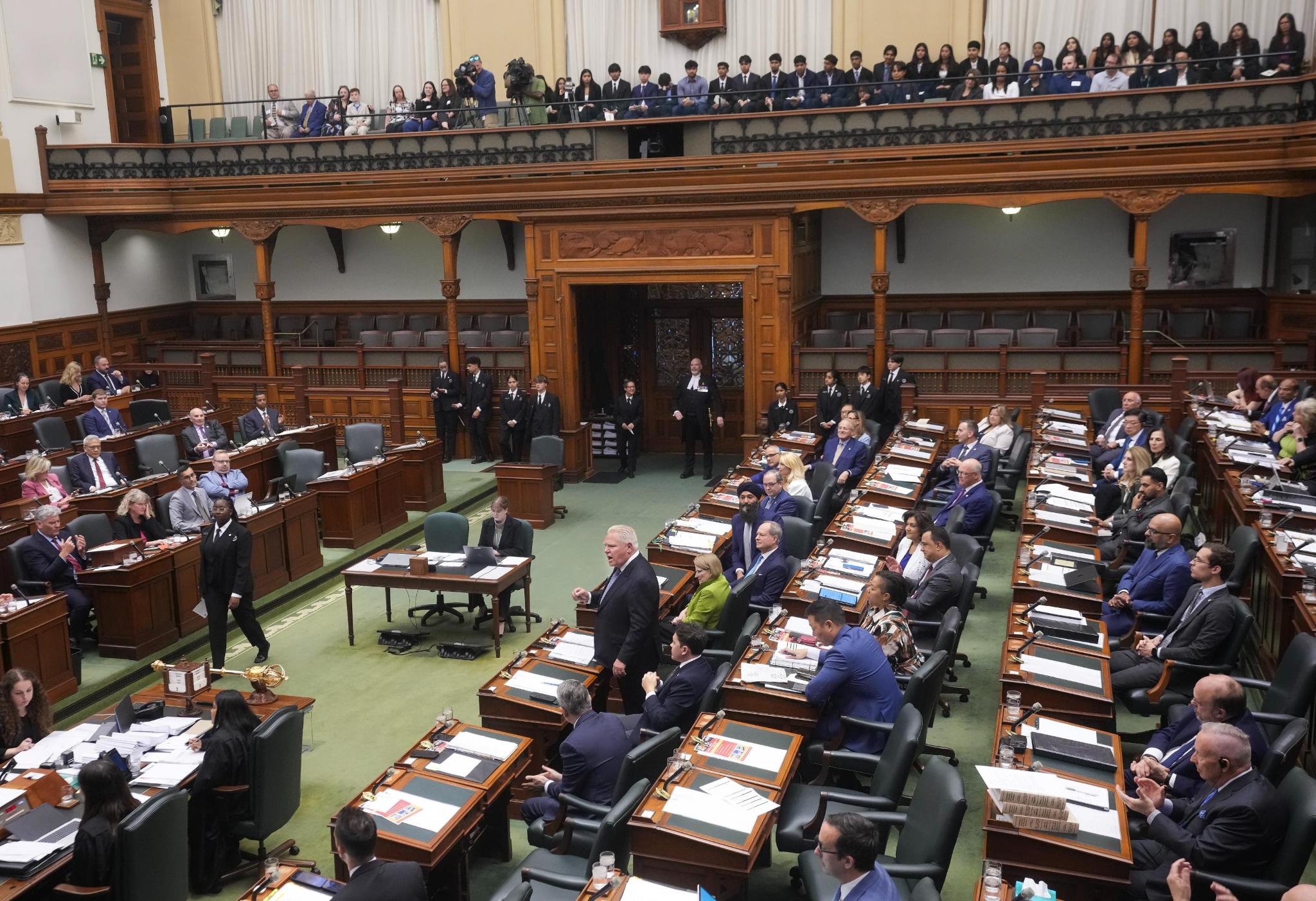
The Ontario legislature is set to return this week after a long summer recess.
A lot has happened over the summer – tariffs continue to cause damage to jobs and the local economy, students are caught in a major OSAP upheaval, data centres are expanding and digital IDs are coming.
Summer is over. Queen’s Park is back, and five big issues are on our radar:
1. A Reenergized Ford Government Bounces Back
The last time politicians gathered at Queen’s Park, the government was badly bruised from some self-inflicted wounds and a fear that they may have lost their ‘for the people’ touch. The Premier took the summer to reclaim his role as ‘Captain Canada’ in response to a new 50% US tariff rate on many Canadian products. The PCs earned victory in 2 out of 3 by-elections, and they continue to lead in recent polling. The Premier also refreshed his cabinet and parliamentary secretaries, maintaining the core economic portfolios while switching Ministers in other key portfolios. All of this points to a government returning to Queen’s Park with a renewed spring in its step and belief that they’re on the right track.
You can read Counsel Public Affairs insight on the new cabinet here: Ford’s Fall Reset: Stability at Home as Uncertainty Builds Abroad – Counsel Public Affairs
2. Tariff Relief and the US Midterm Elections
Prime Minister Carney and Premier Ford last week announced an $8.7 billion ‘action plan’ to protect Ontario workers and industries. New measures included targeted support for the steel, auto and critical minerals sector. The government can be expected to use this legislative session to continue introducing support and removing barriers to the economic well being of hard-hit sectors under its Protect Ontario banner. Counsel’s Dylan Moore has more insight on what this means for the Ring of Fire here: The Ring of Fire: Partnerships, Progress, and the Road Ahead – Counsel Public Affairs
Next week, all eyes in Ontario will be on the US midterm elections, with many hoping that a change in party control of the US House of Representatives or Senate could lead to an end of US aggression. While there are rumours that a deal might be close, Canada is unlikely to see tariff relief simply from a change in which party controls Congress as much of the President’s trade agenda comes via use of executive authority.
3. Packed Legislative agenda to fix what’s broken and continue the Ford ’Protect Ontario’ agenda.
Finance Minister Bethlenfalvy will table the government’s Fall Economic Statement on Thursday. Often seen as the government’s mini-budget, this will set the tone for the upcoming session in a way that is often reserved for Throne Speeches. It’s also an opportunity to get any bad news out of the way as Ontario is expected have a higher than anticipated deficit. New spending and tax relief are expected to be limited and focused on continued support for tariff-hit sectors.
Additionally, the government has already signalled several planned pieces of legislation including to target high business costs with the blue box program and to fix gaps in fraud preventing measures in OSAP loans for students in the private career college sector. On top of this, Counsel is watching for potential legislation improving access to health care, reducing red tape, speeding up highway construction, and preventing crime.
4. Digital Growing Pains
Demand for power to support cloud and AI computing has made building more data centres in Ontario necessary. The government knows this will be a fight; Canadians are increasingly negative towards the risks of AI and the potential for damaging environmental impacts from new data centres. The government has taken a pragmatic approach, balancing needed growth with ensuring consumer protection and trust. The government believes that by tying in community benefits, it will lead to the win-win conditions that will get communities onside.
Ontario will also introduce digital versions of its identification cards, a plan it previously abandoned in 2021. This announcement is politically risky. Opponents of digital IDs are traditional conservative supporters; they are skeptical of government overreach and the type of restrictions to personal freedom that were commonplace during the COVID-19 pandemic. They are concerned about fraud, privacy and in extreme cases, restrictions to their civil liberties. The government will try to combat these fears through guaranteeing access to physical alternatives, but there will be vocal opponents, especially from within the Conservative-movement. While the Premier has dealt with critics from the right before, like the push for data centres, opposition to digital IDs has the potential to grow quickly. It’s a fight that the government has also determined is worth having to remain competitive in an increasingly digital economy.
5. Emerging challenges for the reenergized government
Both new and returning municipal leaders will have their chance to be influential players in Ontario politics. It is too early to say what kind of relationships will emerge after Monday’s elections across Ontario’s 444 municipalities but the priorities these leaders choose to push with the Ontario government will impact the provincial agenda. If not careful, the Ford government could be in for new fights over infrastructure needs and revenue tools. The province made preemptive moves to ensure its priorities at the local level are achieved. Legislation was passed this year giving the Minister of Municipal Affairs and Housing the power to appoint more Regional Chairs. The appointments will come with new ‘Strong Chair’ powers to help the government’s appointees counter any procedural issues or local opposition.
The Official Opposition NDP has struggled from the lengthy break from Queen’s Park. Their effectiveness at getting their message out, using the legislature, and official watchdogs like the Auditor General and the Integrity Commissioner were big factors in exacerbating the PC government’s struggles during the first half of the year. With a renewed shadow cabinet, the NDP are hoping for a repeat performance this fall, securing a breakthrough before the new Liberal leader is in place. They will try to keep pressure on the government over OSAP, affordability measures, and hospital waiting times.
The Ontario Liberals will also elect their next leader in November. With the Liberal currently less than 10 points down from the PCs in the polls and well ahead of the official opposition NDP, the results of the Leadership will set the likely match up for the next provincial election. After gaining official party status after the last election, the new Liberal leader will have more resources at Queen’s Park to introduce themselves and become an emerging political threat that both the PCs and NDP will want to respond to.
As Ontario’s lawmakers settle back into Queen’s Park today, we will be watching to see if the government can keep its reclaimed energy going despite destabilizing attempts by critics, unexpected events and the consequences of its own chosen fights.