


Why Age Verification Makes Sense According to a Mom Who Studies the Data
When I was twelve, I remember lining up at the movie theatre to see a 14-A film with my friends. We rehearsed our story in case the usher asked for ID, which they often did. The rules were clear, and the people enforcing them took them seriously.
Fast forward to today. My own 12-year-old can download an app (loosely) rated 14+ in under a minute, no questions asked. No ticket booth, no usher, no ID. Maybe a birthdate prompt she can breeze through.
As a parent, I want my daughter to explore, connect, and create online. I don’t believe in digital abstinence, but I do believe in accountability. And as someone who studies public opinion for a living, I know I’m not alone.
To be fair, some of the major app developers have made real investments in youth safety. They’ve built more age-appropriate experiences and introduced systems to identify when a user may be younger than they claim. But those are the exceptions. Most of my daughter and her friends’ favourite apps have none of that. They’re wide open.
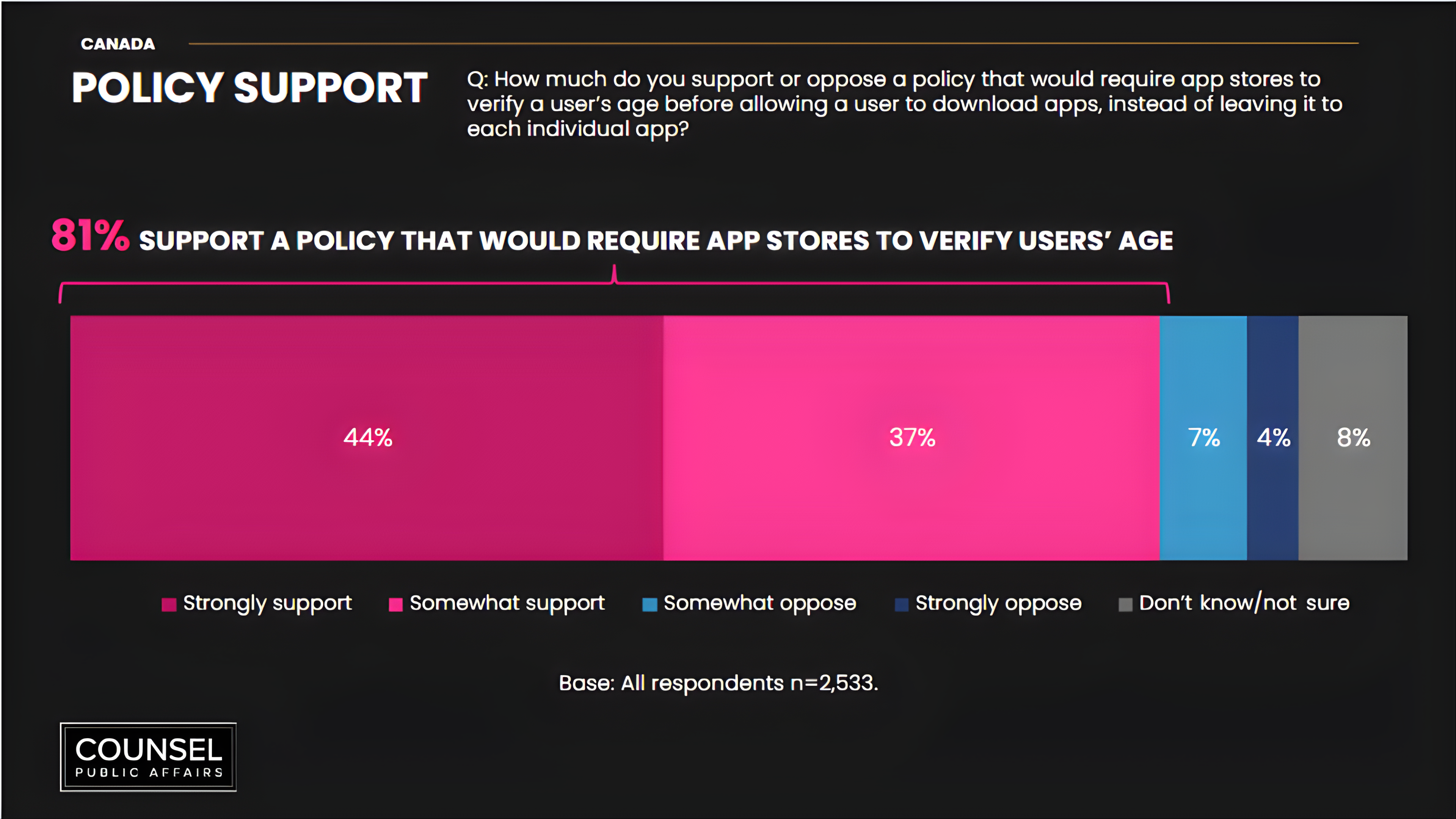
Across the country, people are calling for clear, consistent standards that work the same way for every app, on every device. In our study, 81 percent of Canadians supported a policy that would require app stores to verify a user’s age before they download an app, rather than leaving the responsibility to each developer. When people understand how fragmented things are today, support for reform only grows.
Canadians aren’t asking to take technology away from kids. They’re asking for the same kind of accountability online that already exists offline. When theatres enforced age ratings for movies, we didn’t call it censorship. We called it common sense. The same logic applies here.
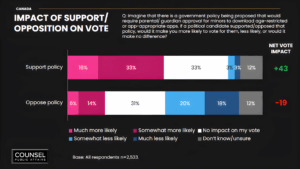
Few Canadians think technology companies are over-regulated, and in our research, voters rewarded politicians who backed stronger age-verification standards. The data show a +43 net vote impact for candidates who support these policies, and a penalty for those who oppose them.
For governments, that’s rare alignment. A policy that’s both right and popular. Canadians see it as a balanced step toward rebuilding trust in the digital environment, not an overreach.
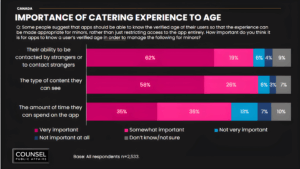
Canadians also don’t see verification as only a gatekeeping tool. Most believe that verified age should help create better, safer digital experiences for minors, shaping what content they see, who can contact them, and how much time they spend in the app. Verification can help customize, not just restrict.
That’s how I think about it as a parent, too. I don’t want to ban my daughter from the apps where her friends connect and learn. I just want to know that when she logs on, someone, somewhere, has built the same kind of age-appropriate structure that used to exist in the physical world.
Right now, that responsibility falls almost entirely on parents. We set limits, check privacy settings, talk about what’s appropriate, and hope it’s enough. But we can’t out-code the internet. We can only work with the systems we’re given.
We’ve done this before. We built age-rating systems for movies, video games, and even advertising, each enforced by a combination of public oversight and industry standards. The online world deserves the same consistency.
As a mother and as someone who studies the data, I see both the urgency and the opportunity. We don’t need digital abstinence; we need digital accountability. We don’t need surveillance; we need smart, standardized verification that protects kids and respects privacy.
What we needed at the movie theatre was a quick ID check. What we need online is the same principle, updated for the digital age. Consistency shouldn’t be too much to ask.
Methodology
Counsel Public Affairs conducted a survey on behalf of Meta from October 9th to 15th, 2025, of 2,533 residents of Canada aged 18+, hosted on Leger Opinion Panel (LEO). The results are weighted by gender, age, and region, based on the most recent Statistics Canada data available. As this study was conducted using an opt-in non-probability panel, no margin of error is possible.