
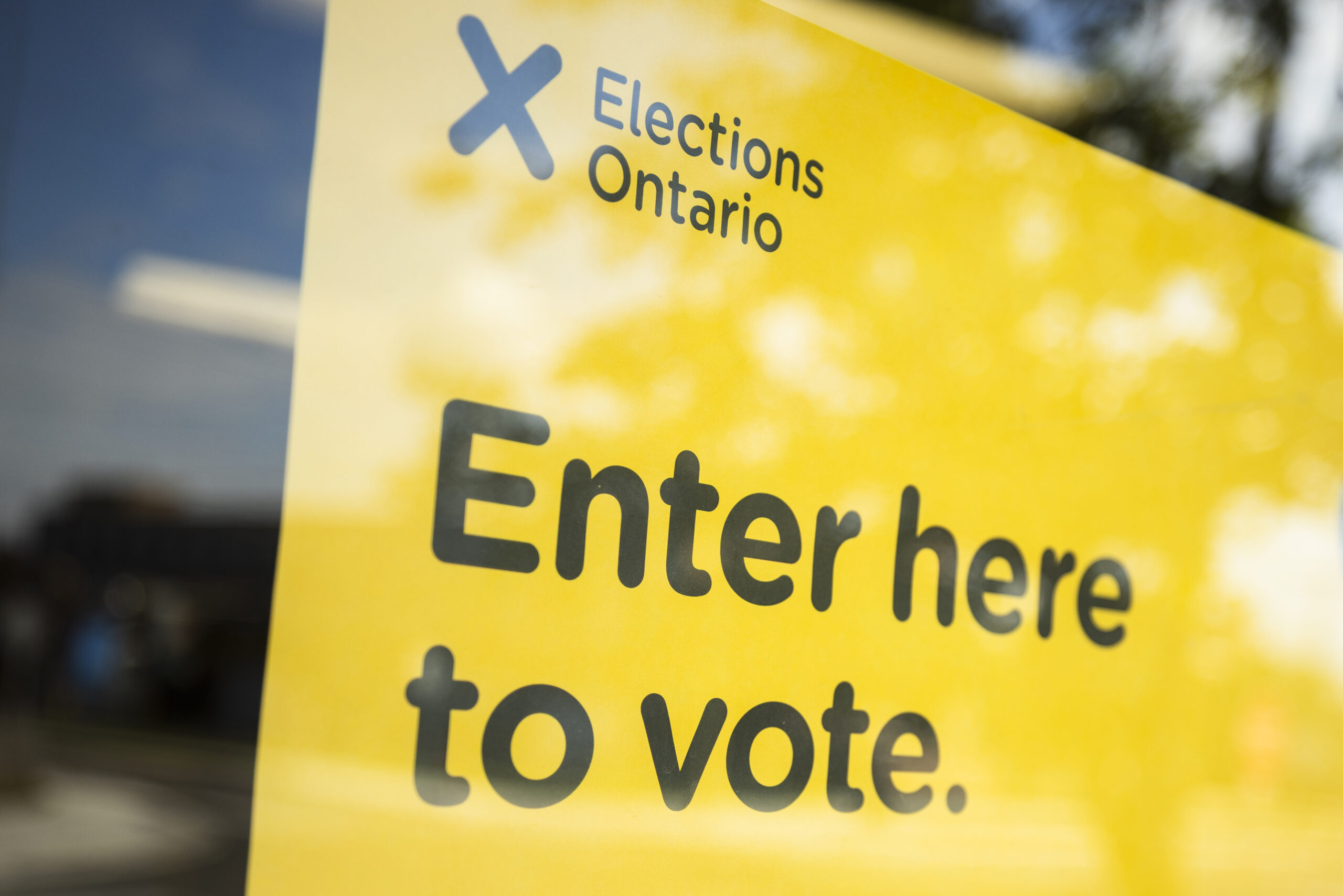
Three provincial by-elections took place in Ontario on September 3rd and for most Ontarians, the night was uneventful. Even the results, a return to status quo, at first seems less than thrilling and over two weeks and a Cabinet shuffle later, Ontario’s by-elections are already old political news.
Yet, that’s exactly why they’re worth another look.
Election night is about winners, losers and vote shares. But having been through many of them, as a party volunteer, political staff and even a candidate, the more important question comes later: What did the inner circle learn from the results and how is it changing what they do next?
Three seats changed MPPs. None changed parties. But the status quo may prove more consequential than it looked on election night.
The Ford Coalition is Durable
Hamilton East—Stoney Creek was a real test.
The constituency is not typically a PC stronghold, and some could argue that a combination of star power and a splintered 2022 NDP had been the only reason the PCs were able to ever win the seat in the first place and they only held it in 2025 due to a snap winter election. They were only temporary holders on matters of technicality! They proved this wrong. The constituency is neither an NDP-lost seat nor simply a Neil Lumsden seat. It was an important win that proves a point for the PCs; they know how to run campaigns, and they’ve built a durable coalition.
The victory is particularly noteworthy given the political environment heading into the by-election. The government had experienced a few months of bad polling results on the heels of a difficult spring session and dogged questions about whether the Premier and his caucus, through several controversial spending decisions, had lost touch with the For The People populist mission that first took them to government.
The 2025 election delivered the PCs a historically rare third majority mandate. The uncertainty around U.S. tariffs, combined with a we have your back platform and message, was key to that victory. Nearly two years later, Ontario has a clearer sense of the U.S. administration’s intentions, and public sentiment has largely shifted from uncertainty to a determination to fight back.
Premier Ford has continued to position himself as “Captain Canada,” promoting Ontario in U.S. media appearances and meetings with governors. He has even drawn the direct attention of President Trump, who has publicly targeted Ford in characteristic fashion. The result has been to reinforce a message that still appears to resonate with voters: Ontario needs someone willing to stand up for the province’s economic interests.
The by-election results, particularly in places like Hamilton East—Stoney Creek, suggest that message remains effective. For a government facing questions about whether it had lost touch with voters, the results offered reassurance that its coalition remains intact and that the Protect Ontario message still has political traction.
Vote Splitting Is Not a Strategy
The Ontario Liberals, who lack a permanent Leader but enjoy a healthy lead on the NDP in province-wide polling, could not secure any electoral success in the by-elections.
Those who like to complain about left-of-centre vote splitting point to Hamilton East -Stoney Creek as an example of where, if the Liberals had stood aside, the PCs would have instead lost to the runner-up, former Hamilton Mountain MPP Monique Taylor.
Vote splitting is a real problem for political parties, though it is not as simple as 1 + 2 equals victory. If the Liberal party were to drop off the ballot, votes fall off and there are many Liberal swing voters who would just as soon vote for Doug Ford’s PC over Marit Stiles’ NDP.
This post is not going to address electoral reform, we know the ground rules of our first-past-the-post elections and to be successful, parties need to be good coalition builders. Winners give voters more reasons to vote for them than not to vote for them. This is an important lesson for parties trying to grow, you will out of necessity need to attract those who supported another party in the last election.
Blaming another party for giving an option to voters that they liked better than what you were offering is not a great path to victory. Instead, being more attractive to a broader set of voters is the simplest way to win.
Confidence Changes How Governments Govern
Summer is over, we’re in a trade war, and a government bolstered by the by-election results will return their attention to implementing their Protect Ontario plan with the feeling that they have licence to move fast and remove economic barriers standing in the way of economic opportunities i.e. Right of Fire or lengthy permitting applications. While two election victories are not the best judge of the public mood, there is a feeling in the government that the people are with them. In time this may be viewed as a reflection point, where the government’s fortunes rebounded. It is likely too early to make that prediction but with a long awaited (yet measured) shuffle to Premier Ford’s cabinet behind us, and a renewed legislative agenda being prepped for when the Legislature returns on October 27th, the Government benches at Queen’s Park will likely be a lot livelier than they were in June.
What this means for your business is that non-tariff related priorities will continue to have difficulty getting attention. There is tremendous opportunity in identifying barriers to job creating investments and ideas that make life more affordable. If your organization is bracing for tariff impacts or wondering how to cut through and tackle big issues in Ontario, Counsel Public Affairs’ Ontario Practice Team is here to help.