
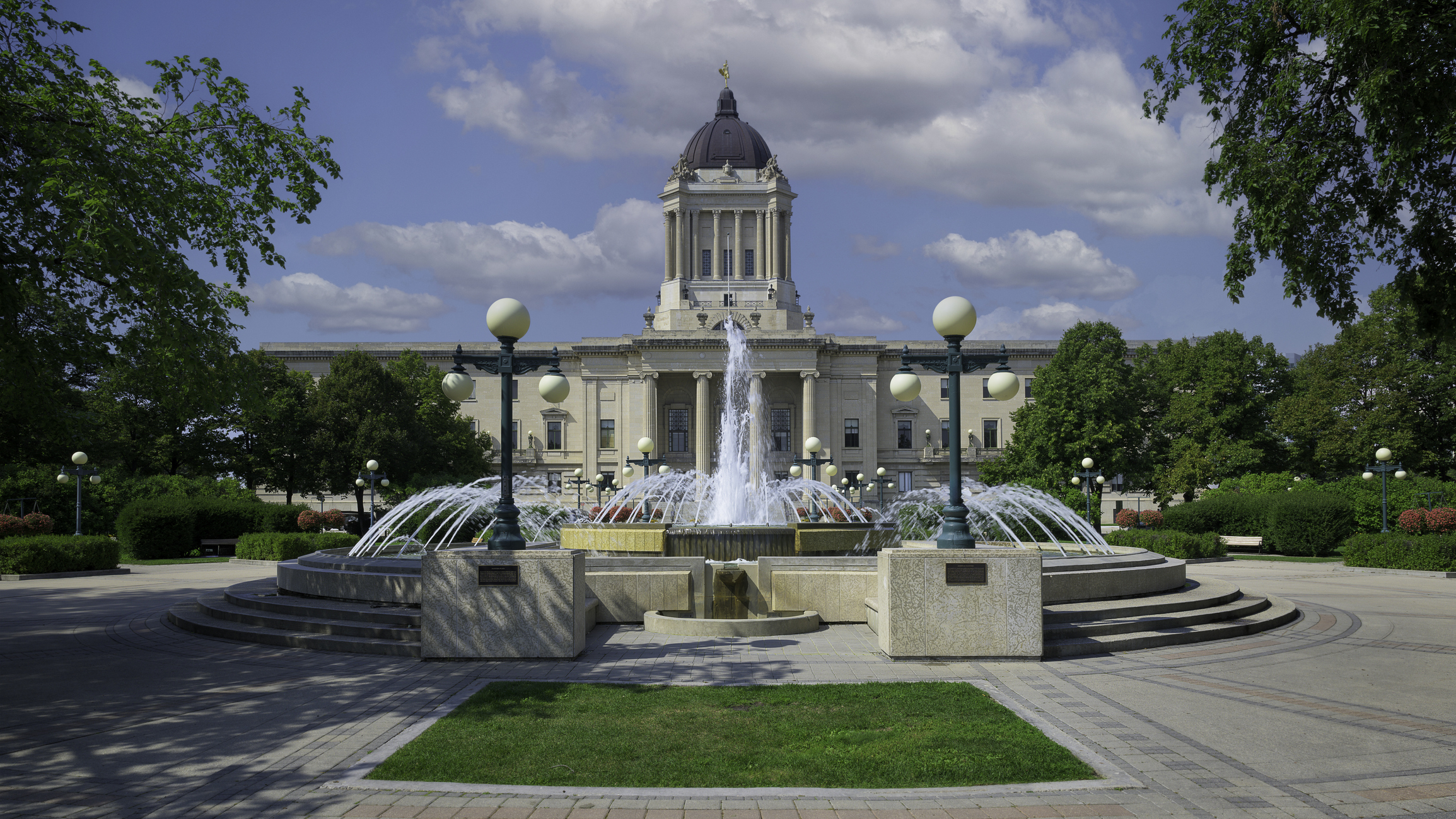
As the Manitoba Legislature adjourns for the summer, the 2026 spring session will be remembered as much for procedural conflict as policy debate.
In the closing days of the session, MLAs sat through overnight sittings as government and opposition members battled over the passage of the Budget Implementation and Tax Statutes Amendment Act (BITSA). The opposition argued the bill didn’t provide enough financial relief, while the government accused the opposition of holding up the bill to make life more affordable for Manitobans.
Targeted Tax Relief
The BITSA bill included measures to remove the Provincial Sales Tax (PST) from prepared food items purchased at grocery stores. It also delivered free transit for youth and increased the homeowner’s affordability tax credit from $1,600 to $1,700.
While antics related to the passage of the bill carried on, Premier Wab Kinew continued to position the Port of Churchill as a cornerstone of Manitoba’s long-term economic strategy. At the same time, the government faced growing criticism over the Manitoba Jobs Agreement, with business and industry stakeholders warning that the agreement, which is intended to prioritize Manitoba workers over out-of-province workers on major provincial infrastructure projects, could increase costs, create additional red tape, and make Manitoba less competitive in attracting private-sector investment.
Healthcare capacity, affordability pressures, and public safety also remained top concerns for the Kinew government and are expected to dominate the political agenda when the legislature returns in September.
Unparliamentary behaviour
Tensions between the government and opposition escalated throughout the session as Speaker Tom Lindsey continually rose from his chair in an effort to rein in both sides of the house. Premier Wab Kinew and Opposition Leader Obby Khan frequently sparred over topics such as affordability, health care and public safety.
Several individual incidents further inflamed tensions. Khan apologized following comments directed at Health Minister Uzoma Asagwara on their gender, while PC MLA Wayne Ewasko was removed from the chamber after remarks directed at the Premier were viewed by Kinew and his caucus as racist.
The Speaker drew public criticism from Kinew and House leader Nahanni Fontaine after ruling that terms such as “racist,” “transphobic,” “misogynist,” “homophobe,” and “bigot” were unparliamentary and will no longer be tolerated inside the chamber.
The increasingly combative atmosphere has drawn criticism from outside observers, including educators who have expressed reluctance to bring students to watch question period.
Banning social media
At the NDP’s One Manitoba Gala, Premier Kinew surprised the crowd and media by announcing that Manitoba would move toward a youth ban on social media platforms and AI chatbots. The Premier directly targeted major technology companies, including Meta, OpenAI, and X, although details remain limited. Current plans indicate the ban will:
- Apply to youth aged 16 and under;
- Begin in schools following the start of the next school year; and
- Include large financial penalties for non-compliant platforms.
Indigenous-Crown Corporation & the Port of Churchill
One notable omission from the Spring sitting was legislation formally establishing the province’s proposed Indigenous-Crown Corporation. The body is expected to play a central role in major infrastructure and resources projects, while creating a new framework for Indigenous consultation and participation.
This government has tied its economic plan directly to major infrastructure projects related to the Port of Churchill. The pressure on government to advance the port project intensified as Prime Minister Mark Carney indicated Churchill would need to have operational LNG exports by 2030 to become a national priority. Feasibility and environmental studies tied to Hudson Bay infrastructure development are underway, while the province continues to signal strong private-sector interest in the Churchill corridor.
Churchill will remain a top priority for this government as it aims to show progress on its key economic file.
Healthcare
Healthcare remained one of the government’s most politically sensitive files throughout the session. The province pointed to the hiring of new physicians and healthcare staff, restoring urgent care services, and broader modernization efforts as evidence of its progress in rebuilding the healthcare system.
Despite those efforts, emergency room wait times and workplace safety concerns continue to create operational and political pressure. Capacity issues have created challenges for Manitobans seeking healthcare services. Yet another tragic example of these challenges occurred in February when a Manitoban passed away during an 11-hour wait in the St. Boniface Hospital emergency room after enduring a 12-hour wait a month earlier. Meanwhile, there has been some progress: surgical backlogs in several priority areas have improved, including orthopedic and cardiac procedures.
Staff safety concerns also escalated further during the session. Nurses are scheduled to vote June 10 and 11 on whether to grey list Seven Oaks General Hospital in Winnipeg. This is a union tactic discouraging members from accepting work at facilities deemed unsafe. Health Sciences Centre in Winnipeg, St. Boniface Hospital in Winnipeg, and the Thompson General Hospital in northern Manitoba have already been grey-listed.
Notable Bills Passed
Included in this session’s legislative agenda were measures to protect and inform against bills that violate Manitobans’ constitutional rights, address rising electrical costs and public usage, and ease pressures on doctors’ offices in the province.
- Bill 4 – The Constitutional Questions Amendment Act – invokes a mandatory judicial review process when a government invokes section 33, the notwithstanding clause
- Bill 11 – The Employment Standards Code Amendment Act – eliminates employer requirements for sick notes
- Bill 20 – The Manitoba Hydro Amendment Act – enables the curtailment of electricity for crypto mining operations and datacentres
- Bill 26 – The Health System Governance and Accountability Amendment Act – establishes benchmarks aimed at eliminating mandatory overtime for nurses
- Bill 39 – The Manitoba Hydro Amendment and Tax Administration and Miscellaneous Taxes Amendment Act – enables government to apply additional power usage levies to large power consumers
- Bill 50 – Pharmaceutical Amendment, Regulated Health Professionals Amendment and Public Health Amendment Act – enables pharmacists to prescribe certain medications
What’s next
The fall sitting will likely focus on demonstrating measurable progress in healthcare, advancing consultation and development work tied to major infrastructure projects, and continuing affordability measures aimed at maintaining political momentum heading into 2027 – election year in Manitoba.
The fall session will see the Progressive Conservatives continue to manage internal turnover as five sitting MLAs have already said they will not run again. This, while the Manitoba NDP has nominated several incumbent candidates and continues to strengthen its organizational readiness.