

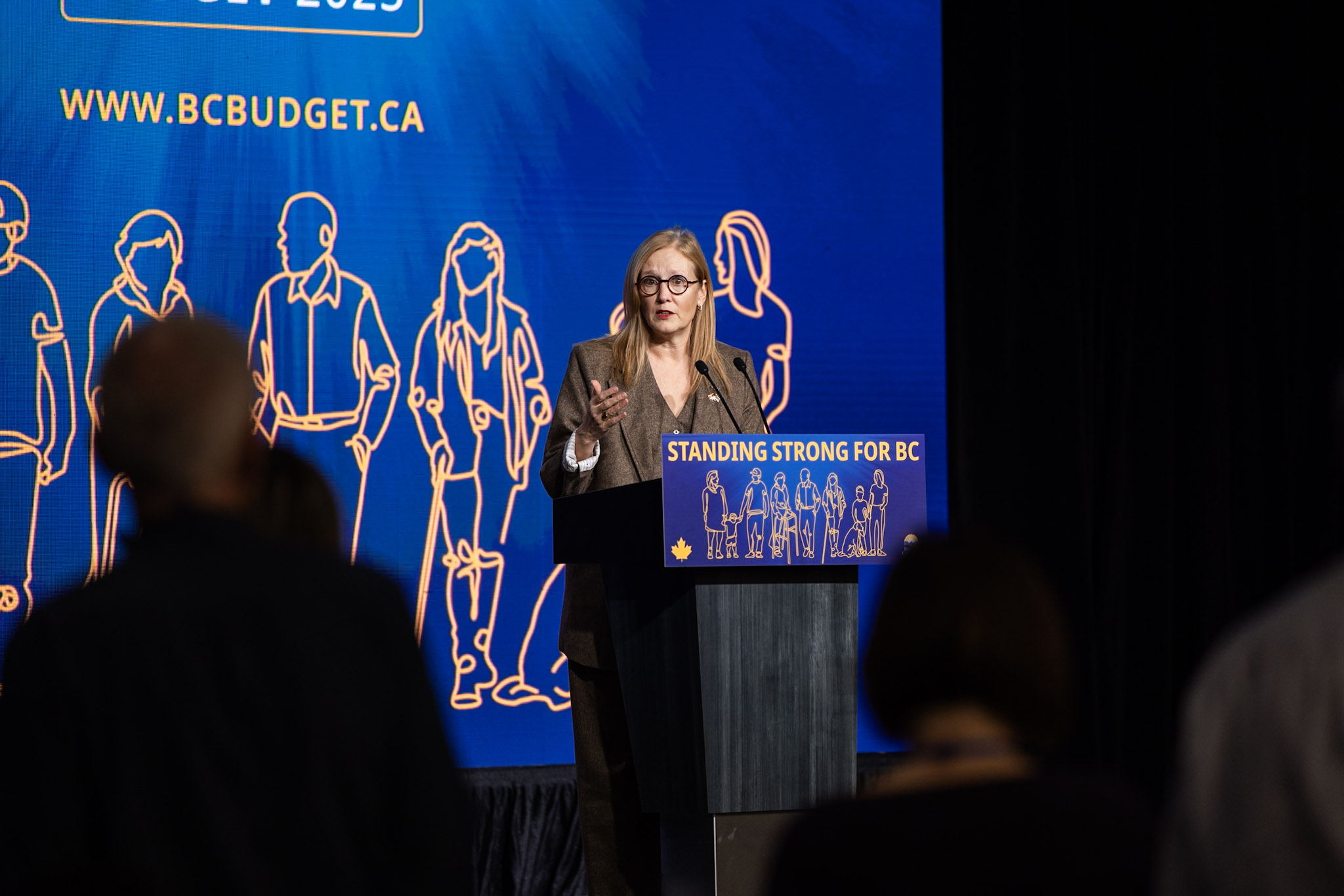
The B.C. government released its first quarter fiscal update this week, projecting a record deficit of $11.6 billion in 2025-26. That is $665 million higher than Budget 2025.
Despite the growing deficit, the fiscal situation in BC mirrors that of Alberta and Saskatchewan. Earlier this month, Alberta Finance Minister Nate Horner announced its deficit will increase to $6.5 billion, up $1.3 billion over forecast. In August, Saskatchewan Finance Minister Finance Minister Jim Reiter announced a $349 million deficit, a dramatic turnaround from a modest $12 million surplus projected on budget day. In all three provinces, the deficit is being driven primarily by reductions in revenue.
Here is a closer look at what is driving the change in BC:
- Elimination of the consumer carbon tax: This cut approved by the BC Legislature in April after the budget was tabled resulted in an unbudgeted revenue loss of $2.8 billion.
- Other revenue reductions include:
-
- Property transfer tax down $247 million due to slower housing sales.
- Provincial sales tax down $174 million due to weaker consumer activity.
- Natural resource revenues down $225 million, with weaker coal and copper prices, lower coal production, reduced forestry stumpage, and lower natural gas royalties.
- Federal transfers down $357 million, due to timing of disaster recovery and transit project funding.
The government saw some increases in spending, while other adjustments leave expenses $74 billion lower than forecast:
- Wildfire response costs are up $613 million.
- Debt servicing costs are up $140 million because of higher interest rates and borrowing needs.
- Refundable tax credits are down $740 million due to elimination of the climate action tax credit.
The government also experienced some increases in revenue:
- One-time tobacco settlement: B.C. booked a $2.7 billion gain from its share of the Canada-wide settlement. Critics argue this overstates the current year’s bottom line since payments will be spread over 18 years. Government says accrual accounting requires revenue to be recognized when it is earned, not when the cash is received.
- Higher corporate income tax revenues: Forecast to be $411 million above budget, reflecting stronger prior-year settlements and updated federal forecasts.
- Increased Electricity Sales: Electricity sales under the Columbia River Treaty up $17 million due to higher power prices during a hot, dry summer.
The broader context
Despite the near-term pressures on the fiscal plan, the economic outlook for British Columbia remains steady. Growth is expected to slow to 1.5 per cent in 2025 and 1.3 per cent in 2026, reflecting the drag of tariffs and global uncertainty. By 2027, growth will return to a more solid pace of about 2.1 per cent annually from 2027 to 2029.
Underpinning those forecasts, retail sales have held up, employment has grown by 1.1 per cent so far this year, and the province’s 6.2 per cent unemployment rate in August was among the lowest in the country. Exports, however, remain a point of volatility as global demand shifts in response to U.S. trade policy.
On the investment side, the province is continuing to push ahead with major infrastructure priorities. In 2025-26, $14.7 billion is forecast for taxpayer-supported capital spending on hospitals, cancer centres, housing, schools, and transportation. That figure is about $710 million lower than budget due to project timing, but importantly, 18 new major projects have been approved since Budget 2025, reflecting continued progress in building capacity and services.
Meanwhile, the province’s balance sheet remains comparatively strong. Total debt is projected to reach $155.4 billion by year end, translating to a debt-to-GDP ratio of 26.6 percent. This measure remains one of the lowest among Canadian provinces, a key marker of debt affordability.
At the same time, expenditure management is beginning to show results. The government is on track to meet its $1.5 billion savings target over three years, with more than $300 million already identified in 2025-26. These savings have come through administrative efficiencies, program reviews, and hiring restrictions, and will feed into the next round of fiscal planning.
It is important to note, however, that this update comes as labour pressures intensify. The BC Government Employees Union has escalated its strike action, and the Professional Employees Association is also on the picket lines. The provincial government is simultaneously negotiating with the Teachers Federation, the Nurses Union, and MoveUP Together, which represents about 8,500 public workers. While the Finance Minister has not indicated how much has been set aside for these negotiations, she has expressed confidence that government will be able to meet reach agreements within current forecasts.
Bottom line:
The deficit has increased because of the removal of the carbon tax, lower natural resource and tax revenues, and extraordinary wildfire and debt servicing costs. At the same time, one-time tobacco settlement revenues and higher corporate income tax have softened the impact. The government continues to maintain it is managing spending carefully, while major projects and a diversified economy continue to provide resilience and medium-term growth prospects.