

Turning Your Policy Idea into a Viable Budget Proposal—A Practical Guide
What goes into a good budget submission?
The House of Commons is now moving at full speed after the holiday break and the Standing Committee on Finance (FINA) has issued its yearly call for pre-budget briefs from stakeholders. The submission deadline is April 30th, 2026.
If you are thinking about advancing a proposal for this fall’s Budget 2026, the FINA pre-budget consultation is the starting gun on the government’s next budget cycle.
Because of the new budget cycle instituted by the Carney Liberals, the 2026 pre-budget consultation is happening only a few months after the close of the 2025 consultation in August of last year. This presents the opportunity to fine tune your previous consultation or start from scratch, depending on how business cycles and political shifts have affected your policy priorities.
Sometimes, the hardest part of budget advocacy is knowing what to ask for. Getting your internal stakeholders to winnow down their list of priorities can be a daunting task.
Here are some things to keep in mind when developing a pre-budget consultation submission:
Clearly define the problem or market failure that you are trying to address
To warrant inclusion in the federal budget, you need to clearly define a problem and demonstrate its urgency. What problem are you trying to solve? Why is this occurring? Is this a problem that would better be dealt with by another order of government or the private sector? Why does this need to be dealt with now?
For an effective advocacy campaign, you need to be able to demonstrate that this problem impacts many Canadians and should be prioritized over the thousands of other submissions. If you can’t do this, you are going to have a difficult time convincing policymakers to consider your proposal.
Some examples of good problem statements are:
- Home ownership is unaffordable for 80% of Canadians under the age of 45.
- One in three Canadian kids go to school every morning having not eaten breakfast.
- Remote and northern communities do not have enough resources to fight the increasing frequency of wildfires.
You can follow up these problem statements with a discussion of consequences, urgency, and why it is a collective concern for the entire country. For example:
- One in three Canadian kids go to school every morning having not eaten breakfast. Childhood hunger has been demonstrated to have lifelong impacts on the academic attainment, socialization and productivity of those kids when they become adults. Since the beginning of the pandemic, the number of kids going hungry each morning has increased by 35% nationally.
Paint a picture of the desired outcome
Now that you have established the problem, what is the end state that you are working toward?
Consider this carefully. Are you trying to solve a problem, or simply mitigate it? Are you arguing for more resources to be directed toward an uncertain outcome, or can you clearly articulate what you are trying to accomplish? An example of a clear desired outcome would be:
- Every Canadian family earning the median household income can afford a two-bedroom home in their community by 2030.
Clearly defining the outcome will help you better engineer a more precise solution.
Propose specific solutions
Too often, people approach government to highlight a problem or desired solution without a suggestion on how to deal with it. The problems facing Canada are generally well-understood, while the solutions to those problems are more obscure.
A concise, financially and politically realistic policy proposal has a much better chance of being considered than a vague invitation for the government to solve your problem.
Include information such as, who would administer the policy, what it would cost, the desired timeframe and the preferred policy mechanism. An example would be:
- Amend the Income Tax Act, Sec 122.91(2)(B)(A) and replace “$250” with “$1000”. This change would grant eligible students an additional $750 dollars a year and would incentivize an estimated 50,000 students to upgrade their skilled trades certification. While this policy would result in an additional $25,000,000 worth of tax credits issued each year, it would boost the incomes of the credit recipients by an average of $12,000/year, leading to $57,000,000/year in new tax revenue returned to the treasury.
Propose the right policy mechanism
Traditionally, a budget document is full of spending priorities – and that hasn’t changed. However, the budget has also become a governing agenda, signalling not only what to fund and cut, but a litany of “non-budgetary measures,” announcing consultations, legislative changes and thematic signalling for future initiatives. The federal government has a variety of policy tools available to them, and you should consider which one is most appropriate to facilitate your desired outcome. They include, but are not limited to:
- Convening – The Government of Canada can bring together experts, outside stakeholders and other levels of government to meet and move toward a common goal. This could come in the form of a roundtable or a Federal, Provincial and Territorial meeting on a particular subject.
Example: The Minister of Environment and Climate Change Canada hosts a national meeting with Indigenous stakeholders and provincial/territorial Ministers to discuss upcoming changes to the Impact Assessment Act.
- Consultation – A form of convening. Launching a formal consultation process in the pursuit of a set of policy recommendations.
Example: The Minister of Artificial Intelligence launches a public consultation on proposed safety measures for large language models.
- A national or industrial strategy – A process commitment to develop a suite of policy tools in pursuit of a complex goal.
Example: The Minister of Innovation, Science and Economic Development tables an industry co-developed strategy document on long term competitiveness for the auto sector.
- Moral suasion/bully pulpit – Using government communications or advertising to persuade people or organizations to behave a certain way.
Example: Health Canada launches a public information campaign about the dangers of tobacco.
- Internal rule change – The government changes the way they administer something internally.
Example: The Defence Procurement Agency streamlines the process for vendors to get security clearances.
- Granting programs – The creation, modification or re-capitalization of a program that accepts applications and distributes funds to produce a preferred policy outcome.
Example: Finance Canada and ISED allocate $3 billion for new clean energy projects under the Strategic Response Fund.
- Financing Facility – Creation of a program that extends concessional loans to finance prescribed projects or activities.
Example: Finance Canada allocates $1 billion to Export Development Canada to finance new investments in low-GHG marine fuel projects.
- Inter-governmental transfers – Moving sums of money to other levels of government so that they can fund an initiative.
Example: The Government of Canada transfers 2 billion to the provinces to support new mental health programs.
- Procurement – The government purchases a good or service directly.
Example: The Department of National Defence purchases a new drone surveillance platform.
- Tariff Measure – The government imposes or removes a duty on an imported good.
Example: Finance Canada imposes a 25% tariff on certain imported steel products.
- Trade restriction – The importation of a particular type of good is banned or restricted.
Example: CBSA bans the importation of goods that were produced through forced labour.
- Tax penalties – Using taxation powers to try and dissuade a specific type of activity or behaviour.
Example: Finance Canada increases the excise tax on tobacco products to decrease tobacco consumption.
- Tax incentives – Using taxation powers to try and encourage a specific type of activity or investment.
Example: Finance Canada removes the GST on fitness equipment to increase physical activity.
- Orders in Council – Applies to many of the aforementioned mechanisms. Cabinet exercising their legal authority through existing legislative or constitutional powers.
Example: Cabinet amends the Output Based Pricing System through the Canada Gazette Process.
- Ministerial Directive – Under existing legal authorities, cabinet or a Minister issue guidance to the department.
Example: The Finance Minister issues a directive to FINTRAC that restricts transactions with entities in Iran.
- Legislation – Parliament passes a bill or amends an existing piece of legislation that creates new laws. New laws might enable new regulatory regimes.
Example: Parliament passes a bill outlawing the importation of exotic animals.
- Creation or enhancement of rights – Codifying a new “right” for citizens or legal entities through legislation.
Example: The Canadian Environmental Protection Act is amended to include a right to a healthy environment.
Consider the moment
Every budget has a theme, and every issue experiences the ebb and flow of political relevance. Four years ago, biomanufacturing and pandemic response were the urgent policy objectives. Three years ago, the transformation to a net zero economy dominated the agenda. Two years ago, there was a strong focus on the housing crisis and affordability. And now, everything is being viewed through the lens of trade, tariffs, and economic sovereignty.
Perfectly aligning your proposal with those major themes each year is not always possible, but it is a useful exercise when thinking about how to frame your ask. Some useful resources to consider include:
- The Government wide mandate letter
- Main and Supplementary Estimates from each department
- Reports and Publications from each department
- Previously Awarded Grants and Contributions
- Studies from the Office of the Parliamentary Budget Officer
Apply the political lens
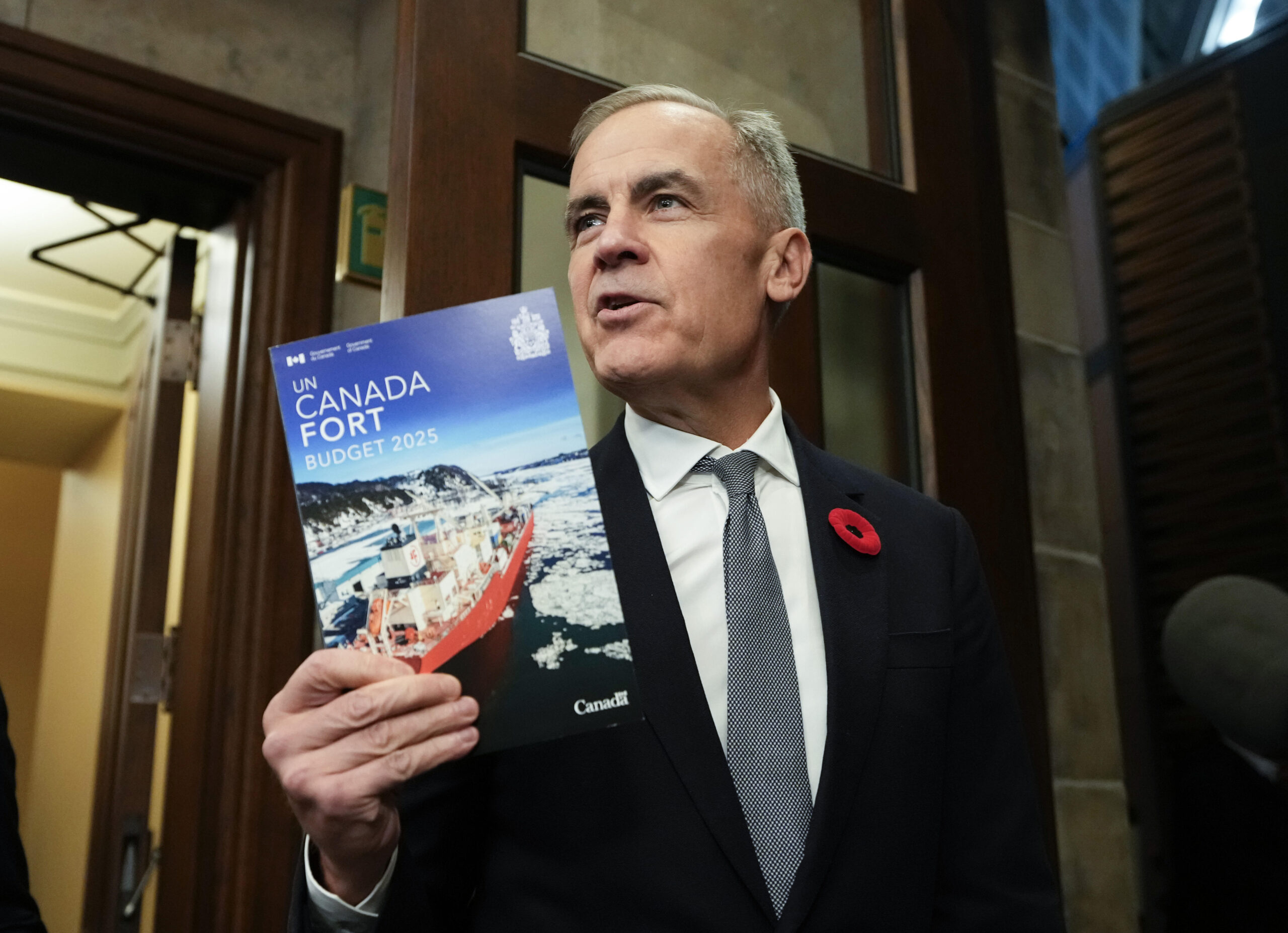
Budget 2026 will be the second budget of Mark Carney’s government and mark the first full year of the newly instituted budget cycle which schedules the budget for tabling in the Fall.
The political and economic landscape has evolved since Mark Carney took office a year ago. While Canada – US relations still dominates Canada’s domestic politics, Carney’s relentless trade efforts abroad has begun to widen the aperture and open new and significant opportunities for Canada and those who want to do business here.
Trade, sovereignty, defence, energy dominance, artificial intelligence and affordability remain the salient political issues driving the Government’s agenda.
In addition to thinking about the economic and practical dimensions of your proposal, you must consider the politics of what you are proposing. To whom does this proposal appeal to? Will it be popular with voters, or risk turning them off? Is this something a political party would want to put in the window, or quietly implement as a matter of housekeeping? Could this policy be used as a cudgel between political rivals, or will it be used as a shield to deflect criticism? You may be uncomfortable thinking about the political dimensions of your proposal, but in a democracy, public opinion matters.
Build the parade
Now that you have a great budget proposal, you may want to find other organizations to co-sign or produce a letter of support. Consider the political relevance and credibility of your co-signers. An organization that represents thousands of people is a better co-signer than a small one. An organization that is known for their policy expertise in a relevant field is better than one that no one has heard of before.
However, beware of any digital advocacy strategy that amounts to a “spam campaign,” either through templated letters or form emails. What might have worked out of sheer novelty five years ago has aged quickly – and not well. A more constructive approach highlights the political capital behind an issue or cause.
Having a diverse set of political and institutional stakeholders back your proposal can be an effective way to communicate political credibility.
Next steps
Now, the real work begins. Counsel has you covered.
Schedule a time to speak to our multi-partisan team who can help you every step of the way. Email us to arrange a time to meet.