

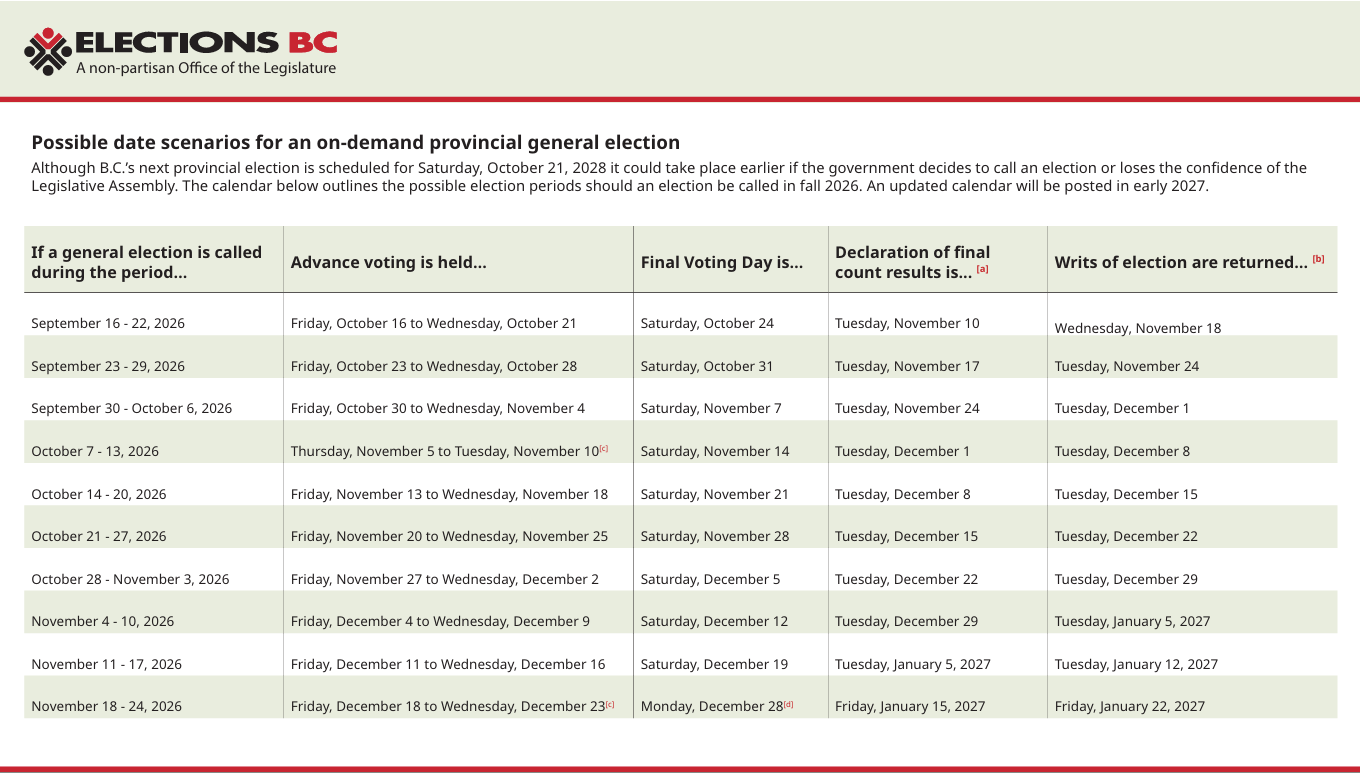
Following Kerry-Lynne Findlay’s resignation as leader of the BC Conservatives this weekend, speculation has intensified that David Eby will visit the Lieutenant Governor this week to request an election, with voting day widely rumoured to fall on October 24. Nothing has been confirmed, and the Premier has not indicated his intentions publicly, but the possibility is significant enough that it is worth reviewing what a writ period would mean in practice. That anticipated timing would also place a provincial vote just a week after BC’s municipal elections on October 17.
Once a writ does drop, whenever that happens, the Legislature dissolves and the government moves into caretaker mode. Below is a summary of what that means in practice.
Caretaker Mode
The Premier and ministers stay in office but govern with restraint. Routine and urgent business continues, but new policy, major funding decisions, significant contracts, senior appointments and non-essential government announcements are all set aside until a new government and cabinet are in place. Meetings with Ministers and political staff will not proceed during this period and will need to be resubmitted afterward. Additionally, caretaker mode does not end on election night. Once a government is confirmed, forming or reconfirming cabinet and issuing new ministerial mandates typically takes several weeks, so the practical restraint period runs longer than the campaign itself.
Existing Funding and Contracts
Restraint applies to new decisions, not to commitments already in place. Multi-year grants, signed contracts and previously approved funding continue to flow without interruption through the writ period.
Regulatory and Tribunal Applications
Applications before independent tribunals and regulatory bodies, such as the Agricultural Land Commission and the Environmental Assessment Office (EAO), generally continue their normal track, since staff-level review and adjudicative decisions are not cabinet actions. The one exception is any step in a process that requires a final ministerial or cabinet sign-off, which is more likely to be held until after the election.
Labour and Regulatory Processes
Arbitration processes already underway between unions and employers continue independent of the election, since these are decided by arbitrators rather than cabinet. Administrative continuations of existing programs, such as routine extensions of established funding initiatives, are generally treated as reversible and non-controversial and tend to proceed. Any step that requires a new Order in Council, such as formally designating parties under a regulation, is more likely to wait for an incoming cabinet.
Legislation Before the House
Any bill that has not received royal assent dies on dissolution, regardless of how far it progressed. This means a bill will need to be reintroduced from first reading in a new session, even where the same government is returned.
Government Communications
Beyond pausing ministerial meetings, government communications staff typically hold non-essential announcements, advertising and social content for the duration of the writ period. Clients expecting a co-announcement, joint release or promotional support from a government partner should plan for that to wait until after the election.
Third-Party Advertising
Once the campaign period begins, BC’s Election Act regulates any advertising message that takes a position on an issue associated with a party or candidate, not just messages that name one directly. Organizations planning public messaging during the campaign period on a subject connected to government policy may need to register as a third-party sponsor with Elections BC before that advertising runs, regardless of the amount spent.
Lobbying Obligations
The Lobbyists Registration Act continues to apply through the writ period. Registrable communications with public office holders still need to be reported in the normal course, and the caretaker convention does not change that obligation.
Will there be a fall legislative sitting?
Following the last general election in October 2024, the Legislature did not reconvene until February 2025, opening that session with the Throne Speech rather than returning briefly in the fall. If the same pattern holds this time, clients should not expect any legislative business, including reintroduced bills, to move until the new year, regardless of how quickly a government is formed after the vote.