

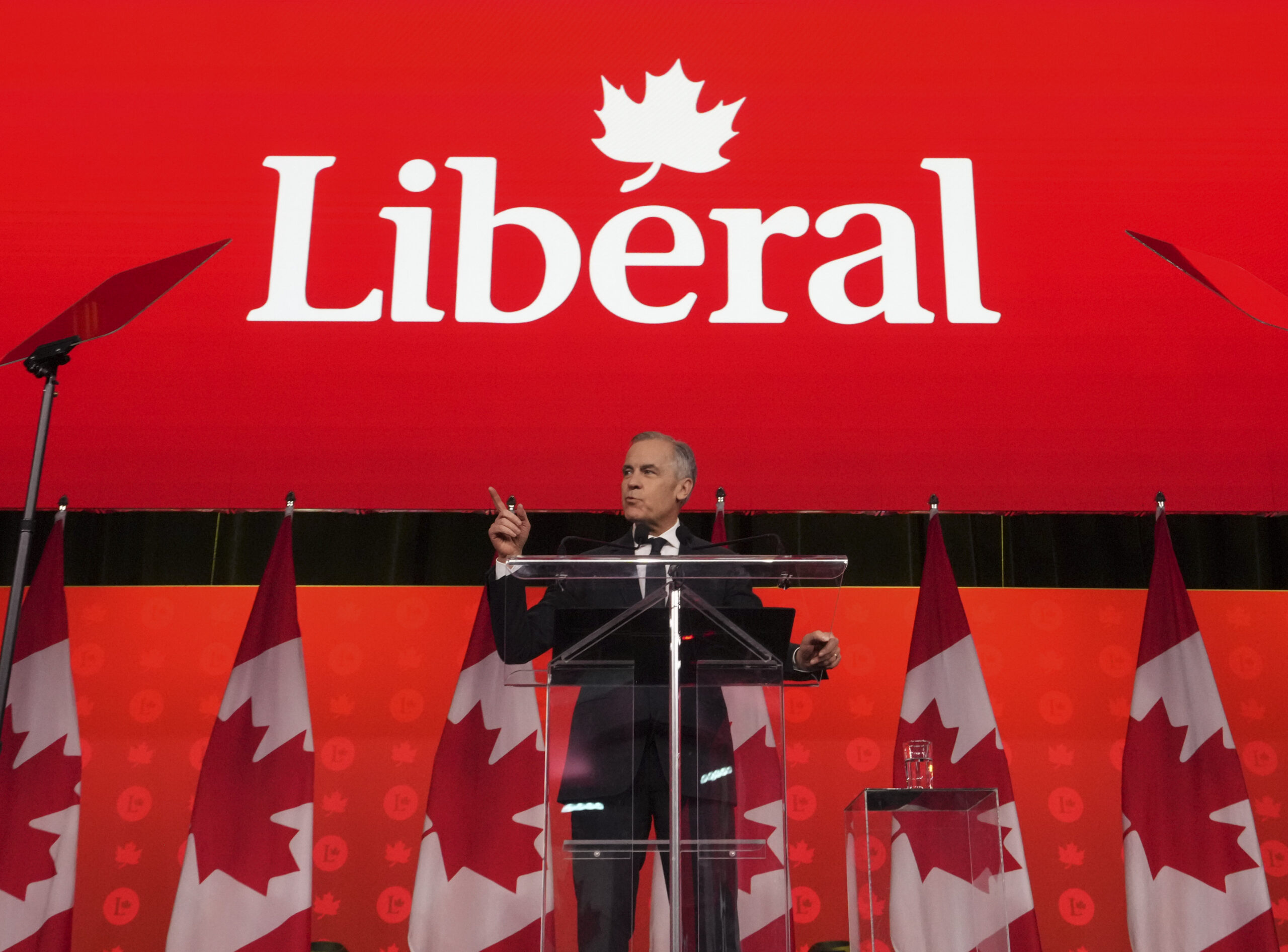
We are now in majority territory. With the help of three by-election wins last night, the Liberal government of Mark Carney has clinched a majority government. This result is built on five floor crossers over the last several months, allowing the Carney Liberals to convert their general election minority government to a majority mandate. This is an unprecedented feat in the Westminster parliamentary system.
The Liberals now hold 174 seats – a slim but workable majority.
Voters returned to the polls in University-Rosedale, Scarborough Southwest and Terrebonne. As predicted, the Liberals handily won the two Greater Toronto Area (GTA) seats, in which they were the strong incumbents. The Liberals were also able to conclusively win Terrebonne, increasing their margin of victory from one vote to over 900 votes.
In the 21st century, since the merger of the Reform and Progressive Conservative parties, majority governments have become a rarity in Canada. Stephen Harper and Justin Trudeau only got one majority each over the course of their terms as Prime Minister. For the government, it is a rare opportunity to implement a broad agenda without the constant threat of an election. For the opposition, the consolation is breathing room to rebuild their brands, message, and electoral infrastructure.
How does a majority change the Carney government?
Carney’s speech at the Liberal convention this weekend offered some clues as to how he intends to lead his new majority government.
In Carney’s view, Canada’s voters have chosen a hard but necessary path, faced with technological change posed by AI and the crumbling international order exemplified by the Trump Presidency.
AI was a surprising theme of Carney’s speech, as he emphasized the need to “either shape our future with AI, or let it control our destiny.” He called for AI to be governed by Canadian values that will improve health care, education and government service delivery – foreshadowing the government’s AI strategy, which is expected to be announced soon.
Carney was even more unabashed than usual when it came to critiquing the United States. He took a step beyond his Davos speech, noting, “our former strengths, which rested on our close ties with the United States, have become our weaknesses.” He called on Canadians to continue demonstrating small acts of solidarity, from buying Canadian wine to supporting local tourism. Carney specifically rejected the past approach of sending 70% of our military spending to the US, calling for a Buy Canadian approach from aerospace to AI that will create over 125,000 new jobs.
Unity was a theme – both national unity and political unity. While he didn’t mention potential Quebec or Alberta independence referendums, it was on everyone’s mind. When Carney said, “Unity does not require uniformity,” and spoke to Canada’s history of partnership and accommodation, he was speaking to opposition MPs who crossed the floor, and Premiers of all parties who are working together for the good of the country.
In elections, it is not unusual for a party leader to make a pitch to the electorate for a majority mandate if they think it would be well received by the public. Carney’s pitch to Canadians is for a unity government that can build big projects and a more resilient, affordable economy, in the face of the US threat, so that we can support the social safety net that so many Canadians rely upon.
What does the majority government mean in practice?
- For the first time since 2019, Canada will have a majority government.
- If the Liberals don’t lose seats or get caught shorthanded in a confidence vote, Parliament may last as long as the next legislated fixed election date, which is October 15, 2029.
- Once the by-election results are certified, the Liberals are expected to amend the standing orders to reconstitute the membership of committees in the House of Commons, affording them majority control of all committee functions.
- While committees will continue to scrutinize legislation, expect bills to move much faster than we have become accustomed to. Bills that died in the last parliament (eg. Privacy and online harms) are expected to be reintroduced with the new government’s stamp on them and to move quickly through the House and Senate.
- Stakeholders and advocacy organizations will no longer have to plan year-to-year on the assumption of an imminent snap election. You now have a planning horizon to carry out more complex, ambitious budget and law reform efforts– including introducing brand-new policy ideas that will require more time to take root.
- Prime Minister Mark Carney will now have the option of acting more boldly and taking more risks, as he will no longer have to worry about losing a confidence vote in the House of Commons, assuming he can keep his caucus united. Expect the government to make decisions in the short term that may be less popular with the Liberal base, such as concluding the MOU with the Government of Alberta. The Carney government will also have a stronger hand to play with the Trump Administration – even if it requires Canada to suffer short-term pain to reach a new trade agreement.
- While the Liberal government will no longer have to worry about receiving the endorsement of an opposition party on matters of confidence, they will have to keep their own caucus happy and ensure that members show up to every critical vote. With a two-seat majority, a handful of disaffected Liberal MPs could threaten to block any piece of legislation.
- The Senate, which is overwhelmingly comprised of Liberal appointees, may decide to flex its muscle with the government. Given the lack of opposition veto over House legislation, we could see the red chamber take on more of a watchdog role, pushing back on some marquee pieces of legislation. We saw this in Trudeau’s majority, where the Senate amended and sent back multiple pieces of legislation, including C-14 (Medical Assistance in Dying) and C-69 (the Impact Assessment Act). Senate reform is also being debated in Ottawa, with eight senators set to be filled by Carney and Senate caucus realignment a possibility, to help speed the passage of legislation.
A majority government, even a slim one, changes how business in Ottawa is conducted. Things move faster, the centre grows more powerful, and the opinions of influential Liberal Ministers will become more important. This new dynamic should change the strategic calculus of your government relations strategy.
Now is a good time to re-think your medium-term advocacy goals, as you can get a lot accomplished with a three-year runway.