
Recent U.S. actions affecting Venezuela’s oil sector have reintroduced a risk to Alberta’s oil sector that had largely faded from view. Venezuela holds the world’s largest proven oil reserves, and most of that oil is heavy crude. That matters because it competes directly with the kind of oil produced from Alberta’s oil sands once it is prepared for market.
For decades, Venezuelan heavy crude was a primary feedstock for large U.S. Gulf Coast refineries. Sanctions and political instability sharply reduced Venezuelan production, leaving those American refineries short of heavy supply. Canadian oil sands barrels stepped in to fill that gap.
If U.S. policy now enables sustained reinvestment and the return of Venezuelan production, Canadian oil will again face direct competition from a producer with vast reserves and access to the same refineries.
How this impacts Canadians
Venezuela produces heavy crude. Canada’s oil sands produce bitumen, which is even heavier. Before it can be shipped or refined, bitumen must be upgraded or diluted so it behaves like heavy crude.
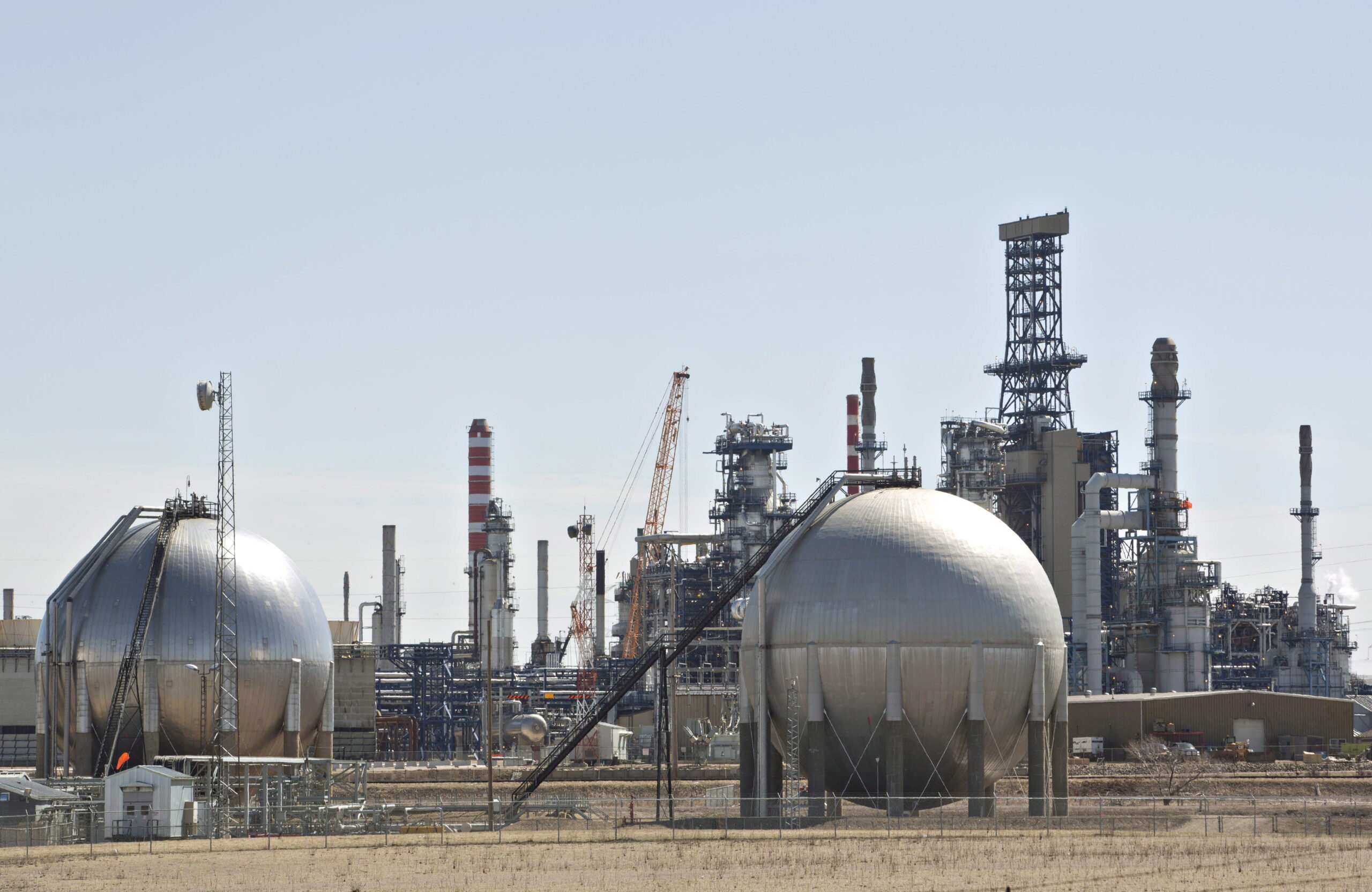
Once prepared for market, Canadian oil sands barrels and Venezuelan heavy crude compete for the same small group of large, complex refineries. Those refineries are concentrated in the U.S. Gulf Coast and parts of the Midwest.
Canadian oil from the oil sands is usually sold at a lower price than lighter types of oil. This price gap exists because oil sands crude is heavier, costs more to ship, and can only be processed by a limited number of refineries.
When Venezuela’s oil is mostly shut out of the market, those refineries have fewer options. Canadian oil becomes more valuable as a result. When Venezuelan oil returns, refineries have more choice. Canadian oil faces more competition, and the price refineries would pay for it falls. This is the main way U.S. decisions on Venezuela affect Canada’s oil sector.
Why Canada’s oil is tied to the United States
The oil sands produce bitumen, not conventional oil. Bitumen is extremely thick and cannot move by pipeline on its own.
To reach market, producers either upgrade bitumen into synthetic crude or dilute it. Dilution blends bitumen with light condensate, a very light liquid often produced alongside natural gas. Condensate allows the blend, known as dilbit, to flow through pipelines.
Canada does not produce enough condensate domestically, so large volumes are imported from the United States. This links the oil sands system to U.S. energy markets even before refining is considered.
Canada refines some oil sands production, but most is exported as crude. Domestic refining capacity is limited relative to output, and U.S. refineries offer scale and specialization that Canada does not.
For decades, most Canadian heavy oil has moved south by pipeline to U.S. markets. That dependence has delivered stability, but it has also left Canada exposed to U.S. policy decisions and refinery competition.
What Trans Mountain changed and what it did not
The Trans Mountain Expansion, which entered service in May 2024, increased potential system capacity from roughly 300,000 barrels per day to about 890,000 barrels per day. It increased a route to tidewater for western Canadian oil.
TMX allows Canadian oil to reach buyers beyond the United States. Some barrels supply British Columbia directly. Others flow to Washington State. An increasing share is exported by tanker from the Westridge Marine Terminal to the U.S. West Coast and overseas markets.
TMX improves optionality, but it does not eliminate U.S. exposure. The United States remains the dominant buyer of Canadian heavy oil, and U.S. refinery dynamics continue to shape Canadian pricing.
How governments may respond
Venezuela’s production will not return overnight. Years of underinvestment mean any recovery will take time and capital. That creates a limited window for Canada.
Governments have three broad levers.
- Market diversification: TMX reflects this approach by reducing exclusive reliance on U.S. markets. Additional market diversification would further reduce pricing risk, but it raises complex political questions.
- Value capture and resilience: Expanding domestic upgrading or refining could reduce exposure to foreign policy shocks, but these projects require massive capital, long timelines, and regulatory certainty that has often been absent.
- Political and diplomatic engagement: Canada has a direct interest in stable access to U.S. markets and in understanding how U.S. sanctions and licensing decisions affect North American energy integration.
These choices carry different political benefits and costs. Federal, Alberta, and British Columbia governments each face distinct incentives tied to climate policy, Indigenous partnership, economic exposure, and public opinion.
Why timing matters
Pipeline projects and oil production recoveries share one trait. Both take years, not months.
If Venezuelan heavy crude returns in volume over the coming decade, Canadian producers will face increased competition. The difference will be whether Canada enters that period with diversified market access or with the same structural dependence it has carried for decades.
U.S. policy on Venezuela has made that question urgent. For Canada’s oil sands, the issue is not ideology. It is exposure, timing, and risk management.