
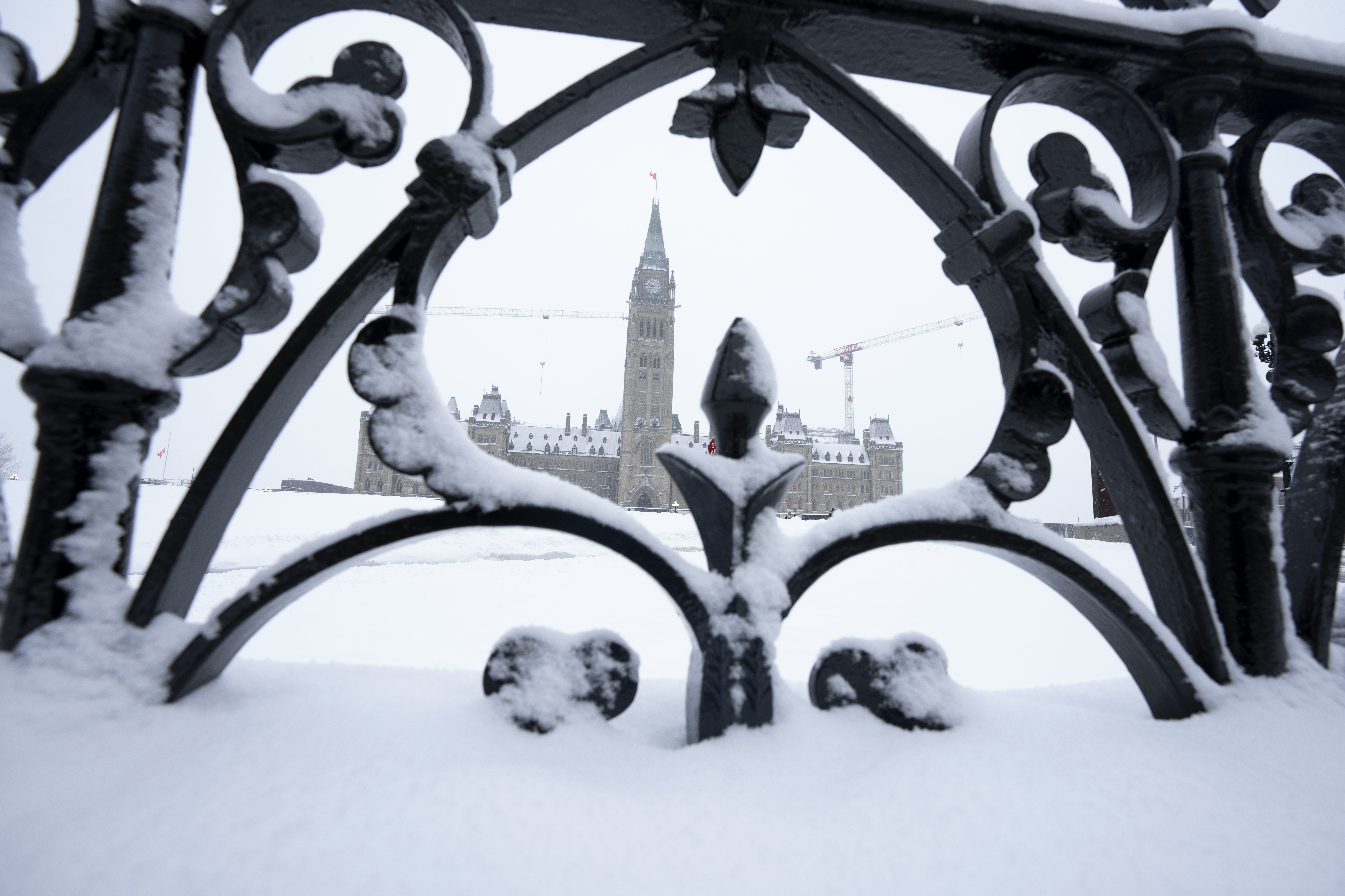
After a burst of activity in the spring following Mark Carney’s April election win, Canada’s new Parliament returned in September to face more familiar gridlock.
Parliament’s resumption saw Pierre Poilievre re-enter the House after winning a byelection in Alberta, setting the stage for a more engaged official opposition.
The government was only able to pass two bills during the fall sitting and has only shepherded five government bills to royal assent this year, challenging any notion that Mark Carney can move Parliament at the speed of business – for now at least.
With news breaking the Markham-Unionville MP Michael Ma has crossed the floor from the Conservatives to the Liberals, following the same path as Chris D’Entremont in early November, the Carney Liberals are now only seat away from a majority government. Pressure is mounting on Poilievre to keep his caucus united ahead of a January leadership review.
Committees dictated much of the dynamic in the fall sitting. With the Bloc Quebecois holding the balance of power on committees split evenly between the Liberals and Conservatives (the NDP do not hold a seat on committees), the Liberals needed to reach across the aisle to advance studies and prevent committees from defaulting to opposition-driven agendas rather than government priorities. If the Liberals can woo an additional floor crosser, they would need to prorogue Parliament to reset committees.
While this dynamic has played out in the House of Commons, Carney introduced his first budget on November 4th. The document leans into to Keynesian economics by carving out a strong role for the state in significant projects, housing, and defence industrial policy (see our budget blog here for the full breakdown). The budget bill has passed its initial confidence votes but is still being debated at second reading and likely won’t pass until March, at the soonest.
Legislative Progress this fall
Government bills receiving Royal Assent:
- C-3: An Act to amend the Citizenship Act
- C-17: Appropriations for the fiscal year ending March 31, 2026
Government bills that passed the House of Commons and will be considered by the Senate in the new year:
- C-4: Making Life More Affordable for Canadians Act
- C-12: Strengthening Canada’s Immigration System and Borders Act
Bills that are in the 2nd reading committee stage:
- C-8: Cyber security
- C-9: Combatting Hate Act
- C-11: Military Justice System Modernization Act
- C-13: UK CPTPP Act
- C-14: Bail and Sentencing Reform Act
- C-15: Budget implementation Act
Elbows Down in Trade Talks
After a working visit by Carney to the Oval Office in October, Canada and the United States seemed close to a breakthrough to resolve US tariffs impacting Canada’s steel and softwood lumber industries. This came after Carney pared back Canada’s retaliatory tariffs the month before. Despite a flurry of high-level negotiations, no breakthrough could be reached amid reports that the Trump administration would not meet Canadian demands, along with leaked comments from US Commerce Secretary Howard Lutnick that the administration wants to end all imports of Canadian-assembled finished automobiles. Trump then called off trade talks entirely in response to the Ford government’s US-television ad campaign, depicting Ronald Reagan’s historical opposition to tariffs.
The prevailing wisdom is now that “no deal is better than a bad deal,” and as the US economy sours alongside Trump’s historically low approval rating, Canada can wait out the administration. This is a dangerous game though, as the administration ramps up rhetoric regarding the renegotiation of CUSMA, perhaps breaking it into two separate bilateral agreements between the US and Canada, and the US and Mexico.
With Canada-U.S. Relations at a low point, Mark Carney has made it a mission to forge trade partnerships with Allied countries to reduce Canada’s reliance on the United States. These trade partnerships include Canada–Mexico Comprehensive Strategic Partnership, Indo-Pacific & ASEAN Trade Partnerships,Singapore trade & investment partnerships, Canada–United Arab Emirates: FIPA + Future CEPA, and Canada–EU: SAFE Defence-Industrial Trade Partnership, among others.
These partnerships will be key to delivering on Mark Carney’s promise to double non-U.S. exports over the next decade.
Office Politics
Mark Carney has established a habit of creating a new office to address each of his major policy priorities.
The Major Projects Office has been created to help move projects of national interest faster through the approvals process. Two batches of major projects have already been announced. (Read our full blog about PONIs for further details)
The Prime Minister has also established the Defence Investment Agency to help Canada meet its NATO Targets and streamline National Defence procurement. This agency focuses solely on projects valued at more than $100 million.
In Budget 2025, the Carney government committed to establishing an Office of Digital Transformation that will proactively identify, implement, and scale technology solutions across the federal government. As the government continues to reduce headcount in the public service to cut costs, they are set to leverage digital tools to make up for fewer personnel. The Government of Canada has published its first public AI Register, providing Canadians with information on where and how AI is used within the federal government.
And we can’t forget Build Canada Homes, the new agency created to build new affordable housing on public land. At a keynote speech at the Empire Club of Canada in November, CEO Ana Bailão unveiled the federal agency’s new proposal portal and Investment Policy Framework for new housing projects.
A Deal to Make a Deal
Carney stunned environmentalists and energy producers alike by signing a Memorandum of Understanding with Alberta Premier Danielle Smith that commits the federal government to allow the development of a new oil pipeline to the BC coast, in parallel with the construction of the Pathways carbon capture and storage project.
The sweeping agreement also suspends the Clean Electricity Regulations (CER) which would have banned the creation of new unabated gas-fired electricity generation, in exchange for setting a $130/ton credit trading price for Alberta’s industrial carbon pricing system. This concession was reportedly the last straw for Steven Guilbeault, who quit the Carney cabinet in protest as cancelling the CER would make it impossible for Canada to achieve its climate targets, so he claims. Guilbeault’s departure is a blow to the Liberals in Quebec – and he has warned that lax climate policies will fuel Quebec’s sovereignty movement.
On the other side of the ledger, with Alberta challenging the CER in court, ignoring the federal benchmark, and walking away from Pathways, Trudeau era climate policies may have added up on paper but were doing more to fuel Alberta separatism (Premier Smith was even booed at her party convention) than reduce emissions.
This new “grand bargain” sets aggressive timelines to reach April 1 agreements with Alberta on industrial carbon pricing (including electricity), methane equivalency, and Pathways. Future agreements will focus on data centres and nuclear build-out.Indigenous accommodation and support from the BC government will remain major sticking points on any new pipeline – as well as finding a private sector proponent willing to invest in it.
Sovereign Artificial Intelligence
With the appointment of Evan Solomon as the Minister of AI, several key announcements have been made in the technology space.
At the Empire Club in September, Minister Solomon announced an AI task force to review submissions for a rebooted AI Strategy. This consultation garnered over 11,000 responses over a one-month period. All of these stakeholder insights and recommendations will feed into the draft of an initial report on this consultation; this will likely be released at the end of 2025 or early 2026. Solomon noted that this will be a “first draft” and he will seek additional stakeholder feedback before a final version of an AI Strategy document is released.
The government also announced in Budget 2025 a $925.6 million commitment over five years, starting in 2025-26, to support a large-scale sovereign public AI infrastructure that will boost AI compute availability and improve access to sovereign AI compute capacity for public and private research.
Housing
While the housing crisis remains a prime concern for Canadians, the Carney government has struggled to elevate the policy area amongst competing priorities and self-imposed belt tightening exercises.
Build Canada Homes, the premier housing initiative of the Carney Liberals, was launched in September, funded in the November Budget, and has begun to announce its first projects.
The anticipated Multi-Unit Residential Building (MURB) Tax Credit was not included in the fall budget, making it a possible policy announcement for the spring economic update.
Budget 2025 also announced that the Housing Infrastructure Fund would be assumed into new and larger Build Community Strong Fund. The new fund will employ conditions related to lowering development charges.
Carney’s enhanced GST relief for first-time buyers remains under scrutiny by Parliament and is thus unavailable to aspiring home purchasers.
As housing starts continue to slump and condo pre-sales plummet as the year closes out, it is likely that the Carney government will face heightened calls in the new year to support the residential construction industry and those they employ.
Buy Canada
In the wake of Donald Trump’s trade war, there has been a growing “Buy Canada” movement to reduce our reliance on the U.S. and to become our first, best customer.
Carney first mentioned this policy in September, to ensure the Canadian government buys from Canadian suppliers and only looks to other businesses when no alternatives exist.
The Buy Canada Policy has begun to set broad strokes guidelines for such new government entities as Build Canada Homes, the Major Projects Office, the Defence Investment Agency, and the Build Communities Strong Fund. Carney has also said that this model can serve as a roadmap for provinces and municipalities to apply similar standards to their own procurement. The Prime Minister has stated that the policy will be fully implemented by the spring of 2026.
Defence
The most significant announcement we can expect in the new year is the release of the Carney government’s Defence Industrial Strategy document. The fall budget earmarked funding for this initiative to the tune of $6.6 billion over five years, starting in 2025-26. A central promise – and premise – for this initiative is the development of “our defence industrial base so that more of our military capabilities are procured from Canadian supply chains.” Implied is also the creation of Canadian value chains for material, and we can expect further funding opportunities for dual use infrastructure projects and advanced manufacturing to both drive economic growth and productivity and build fortress Canada.
Counsel’s newest Senior Advisor – former National Security Advisor and Deputy Minister of National Defence, Jody Thomas – can advise Counsel’s clients on what this new Defence Industrial Strategy means for them.
What to Expect in 2026:
Poilievre’s Leadership Review
The Conservatives are hosting a delegated convention in Calgary from January 29th to 31st. Following the Conservatives’ loss in the last election, Pierre Poilievre will face a leadership review by the delegates at the conference.
While no other leadership candidates appear poised to challenge Poilievre, the absence of rivals effectively raises the standard he is expected to meet. Having won the Conservative leadership with 68% of points on the first ballot, any result exceeding that benchmark would be interpreted as a strong reaffirmation of his mandate.
Despite enduring some internal turmoil in his caucus throughout the fall sitting, it is generally expected that Poilievre will secure a strong endorsement of his leadership at the convention. Nonetheless, caucus management will be a key preoccupation through the holiday season and into the new year.
NDP Leadership Race
The question of who will lead the NDP remains a salient one as the party heads to the ballot box from March 27th to 29th in Winnipeg to appoint Jagmeet Singh’s successor. Depending on which part of the country is surveyed, the frontrunner may change, fluctuating between labour organizer Rob Ashton and climate organizer Avi Lewis. However, Heather McPherson, the current MP for Edmonton – Strathcona, remains a constant across prospective ballots, mainly for her long-time support for the NDP, her labour background, and her stance on issues related to foreign affairs and climate change. Her ability to command the support of longtime party stalwarts and pick up votes in key areas such as British Columbia and Manitoba will be interesting to watch as spring approaches.
All leadership hopefuls have published new policies, such as a Green New Deal (Lewis), a Jobs Guarantee (Ashton), or a Housing First (McPherson). These policies aim to advance and attract voters who shifted toward the Conservatives in rural ridings, and to win back urbanists in major cities who went to the Liberals in 2025. Despite different theories of victory for this leadership, the hopefuls are unanimous in their efforts to be seen as more than just the party of Jack Layton and a viable option for progressives to hold power to account in Canada.
In the coming months, these three will move from simply appearing in key areas such as conventions to making a hard ask of supporters to place them as a first or second choice on their ballots.
Spring Economic Statement
As part of a shakeup to legislative planning, starting in 2026, the government will provide a “spring economic statement,” breaking the tradition of a fall economic statement.
The move was made to create predictability and certainty for business planning and to better align the construction industry before the season begins.
Expected Bills
The government will have a busy legislative calendar, as the Carney government has signalled several bills it intends to introduce in 2026. These include:
- AI legislation
- Privacy legislation
- Open Banking Framework
- Online Harms legislation
The list above is not only significant for its digital policy focus but also for its déjà vu status as representative of legislation that has been plagued by years of delays, both in parliament and in consultation.
The AI bill promises to address considerations from the above-mentioned consultation, while being flexible and “open” enough to adjust to the rapid pace of innovation – both of AI applications and of platforms integrating user friendly aids for research and productivity.
The reintroduced privacy legislation will be crafted for adaptability and integration with other strongly regulated privacy regimes (i.e.. Europe’s General Data Protection Regulation) but it will also be intended to strongly align with advances in Canadian digital sovereignty. It will be a difficult balance to strike, and we could see significant amendments at the study phase of the bill once again.
The regulatory framework for Consumer Driven – or “open” – banking is expected, after a stuttering launch of the initiative two years ago, to move ahead in the early part of 2026, with the implementation of the “real time rail” payment infrastructure, allowing for payments to be “sent, cleared, and settled within seconds, giving both the sender and the recipient confidence that the payments have been finalized and eliminating traditional delays. For example, businesses could make payroll or other bill payments at any time of the day, thereby permitting greater flexibility in payment cycles” (as described by Payments Canada).
The Online Harms legislation is arguably the most urgent of all of the digital bills set to be tabled in the new year. There are controversial considerations that we expect to be tabled, including the advent of a Digital Regulator, and an as-yet-be-clarified approach to age verification that has proven to be hard to enforce effectively (with similar attempts through legislation in the UK and Europe). Newly minted Heritage Minister Marc Miller will be tabling the bill; expectations will be high than he can steer this ably through Parliament.